What is Subcontractor Management? A Guide to Scaling Your Workforce
Author: Lina Banaitytė | 21 марта, 2026
Subcontractor management is the process of coordinating, supervising, and evaluating external contractors who perform specialised work within a project or service operation. Instead of relying solely on internal employees, companies engage subcontractors to provide skills, labour, or materials that complement their core workforce. The role of subcontractor management is to ensure that these external teams operate under the same standards of quality, safety, and accountability as internal staff.
Unlike traditional employee management, subcontractor oversight requires a distinct operational structure. Employees operate within a company’s hierarchy, policies, and long term employment agreements. Subcontractors, by contrast, function as independent entities working under contractual obligations. Their engagement involves licensing verification, insurance checks, compliance documentation, and clearly defined scopes of work. These additional layers mean subcontractor management is less about supervision and more about structured coordination.
For industries such as construction, utilities, manufacturing support, and field services, subcontractors are often essential to delivering complex projects. A plumbing contractor may rely on electrical specialists. A telecom installation provider may require fibre splicing teams. An equipment dealer may subcontract certified technicians during peak service seasons. Managing these relationships effectively ensures that the entire service chain operates smoothly.
At its core, subcontractor management is about maintaining operational visibility across a workforce that extends beyond company payroll. Organisations that master this discipline gain the ability to expand capacity, respond to fluctuating demand, and maintain consistent service quality across multiple teams.
Modern service organisations operate in environments where demand fluctuates rapidly and technical expertise becomes increasingly specialised. Subcontractor management provides a mechanism for businesses to scale their operations without permanently expanding their internal workforce.
One of the most important advantages is scalability. Hiring permanent staff requires long term financial commitments, including salaries, training, benefits, and equipment costs. Subcontractors allow businesses to increase labour capacity only when necessary. A company handling seasonal equipment maintenance or infrastructure upgrades can temporarily extend its workforce by engaging qualified subcontractors. This approach protects operational flexibility while avoiding excessive fixed costs.
Specialisation also plays a central role. Many projects require niche expertise that may not justify full time employment. For example, an HVAC service provider may rely on subcontracted specialists for refrigeration system calibration or industrial air balancing. In construction, general contractors frequently engage subcontractors for roofing, electrical systems, or specialised mechanical installations. Accessing this expertise enables companies to deliver complex projects without maintaining large in house technical teams.
However, expanding operations through subcontractors introduces organisational complexity. External technicians may operate in different regions, follow different internal procedures, or use separate communication channels. Without proper oversight, this can lead to fragmented workflows and inconsistent service delivery.
Technology becomes essential in managing these distributed teams. Field Service Management platforms enable companies to coordinate both internal technicians and subcontractors within a single operational framework. Work orders, service documentation, compliance records, and performance indicators can all be managed within one system, ensuring that external labour remains visible and accountable throughout the service lifecycle.
Managing subcontractors effectively requires a structured lifecycle that begins before any work starts and continues throughout the duration of a project. Organisations that follow a defined process reduce operational risks while improving project outcomes.
The first phase involves evaluation and prequalification. Before engaging a subcontractor, managers must verify licensing credentials, insurance coverage, safety history, and previous project performance. In many sectors this step also includes reviewing compliance with regulatory bodies and industry standards. Companies that skip proper evaluation risk exposing themselves to legal liability and service failures.
Prequalification also helps determine whether a subcontractor can meet the operational requirements of a project. Factors such as workforce capacity, geographic coverage, specialised equipment, and technical certifications often influence the selection process. A subcontractor may have the necessary expertise but lack sufficient resources to support large scale deployments.
Once a subcontractor is selected, the onboarding phase begins. Successful onboarding ensures that external teams understand project expectations, safety procedures, and service protocols. This process often includes reviewing standard operating procedures, providing technical documentation, and introducing communication channels used by the primary contractor.
Clear onboarding reduces misunderstandings later in the project. Subcontractors who understand the reporting structure, documentation requirements, and escalation procedures can integrate into the operational workflow much more efficiently.
After work begins, ongoing performance monitoring becomes the most important management activity. Effective organisations track subcontractor performance through measurable indicators such as response times, completion rates, safety compliance, and service quality metrics. Monitoring these indicators helps identify high performing subcontractors while highlighting potential operational risks.
Performance tracking also strengthens accountability. When subcontractors know their work quality and timelines are being monitored, they are more likely to maintain high service standards. For companies managing multiple subcontractor teams across different regions, consistent monitoring ensures that customer experience remains uniform regardless of who performs the work.
While subcontractors provide flexibility and specialised expertise, they also introduce several operational challenges. These challenges often emerge when communication structures and accountability frameworks are poorly defined.
Communication gaps represent one of the most common difficulties. Subcontractors frequently operate outside the company’s internal systems, which can create information silos. Service updates may be delayed, documentation may be incomplete, and managers may struggle to obtain real time visibility into field activities. This lack of transparency can slow decision making and increase operational risks.
Quality consistency is another major concern. Customers usually interact with technicians without knowing whether they are internal employees or subcontractors. From the customer’s perspective, the service experience represents the primary contractor’s brand. If subcontractors deliver inconsistent workmanship or fail to follow service protocols, the reputation of the hiring company may suffer.
Legal considerations add another layer of complexity. Misclassification risks can arise if subcontractors are treated as employees without proper contractual structures. Additionally, safety incidents on job sites may create shared liability between contractors and subcontractors. Regulatory frameworks in Europe place significant emphasis on workplace safety, compliance documentation, and insurance verification.
Organisations must therefore establish clear contractual agreements that define responsibilities, reporting procedures, and safety obligations. Certificates of insurance, liability clauses, and defined scopes of work all play a crucial role in protecting both parties involved in the project.
Digital tools have transformed how companies manage subcontractors. Field Service Management systems provide a centralised operational platform that connects internal teams, subcontractors, and management within a single workflow environment.
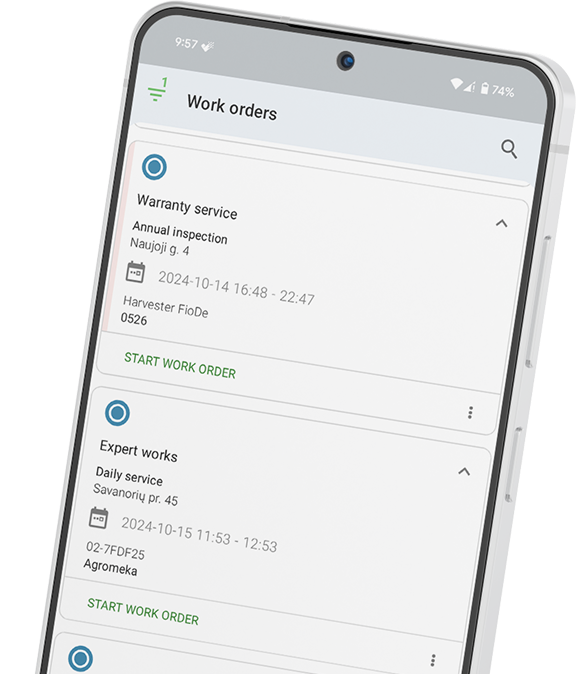
Work orders can be distributed directly through the platform, allowing subcontractors to receive assignments without relying on email chains or manual scheduling. Dispatchers gain full visibility into technician availability, job status, and service completion progress. This improves scheduling accuracy while reducing administrative overhead.
Mobile applications also enable subcontractors to interact with the same operational tools used by internal technicians. Through mobile interfaces they can access job instructions, upload service documentation, capture photos from the field, and record customer signatures after completing a task. These digital records ensure that service history is documented accurately and stored centrally.
Another key advantage is real time reporting. Managers can monitor service progress as work is performed, identify delays, and allocate resources more effectively. Instead of relying on end of day reports, operational teams gain immediate insights into field activity.
When all stakeholders operate within the same digital environment, the system effectively becomes the single source of truth for the entire service operation. Managers can track project costs, subcontractor performance, and operational metrics within a unified platform, allowing them to make faster and more informed decisions.
Financial planning is a crucial aspect of subcontractor management. External labour arrangements influence project budgets, payment schedules, and risk exposure.
Contractual payment structures often determine how subcontractors are compensated for completed work. Some agreements follow a pay when paid structure, where subcontractors receive payment after the primary contractor is paid by the client. Other agreements use pay if paid clauses that link subcontractor payment directly to client payment conditions. These arrangements require careful negotiation and legal clarity to avoid disputes.
Project budgeting must also account for subcontractor pricing structures. Subcontractors may charge hourly rates, fixed project fees, or milestone based payments. Accurate cost tracking ensures that subcontractor expenses remain aligned with overall project profitability.
Risk mitigation strategies typically involve verifying insurance coverage, bonding arrangements, and contractual liability provisions. Performance bonds may be required for larger projects to guarantee that subcontractors complete their contractual obligations. Insurance verification ensures that accidents or property damage do not expose the hiring company to unexpected financial liabilities.
Operational transparency further reduces financial risks. When work orders, service reports, and project documentation are recorded digitally, companies can validate completed tasks before approving subcontractor invoices. This verification process protects organisations from inaccurate billing and ensures that payments reflect actual work performed.
Subcontracting continues to evolve as service organisations seek more efficient ways to coordinate distributed workforces. Digitalisation plays a significant role in shaping how subcontractor relationships are structured and managed.
Advanced analytics tools increasingly support subcontractor evaluation and bid analysis. By analysing historical project data, companies can identify subcontractors who consistently deliver high quality results while maintaining competitive pricing. These insights help managers select partners based on proven performance rather than subjective assessments.
Connected technologies also contribute to improved safety oversight. Sensors, telematics, and site monitoring tools allow companies to track environmental conditions and safety compliance during field operations. When combined with digital reporting systems, these technologies create more transparent and accountable work environments.
Another important shift involves improving the working experience for subcontractors themselves. Organisations that streamline onboarding processes, simplify documentation requirements, and provide clear communication channels become more attractive partners for skilled subcontractors. Reliable subcontractors often choose to work repeatedly with companies that offer structured workflows and fair payment practices.
By investing in collaborative tools and transparent management practices, service organisations can transform subcontracting from a logistical challenge into a strategic advantage.
Subcontractor management plays a central role in modern service operations. It enables organisations to expand workforce capacity, access specialised expertise, and deliver complex projects without significantly increasing internal headcount.
However, managing subcontractors effectively requires structured processes that cover evaluation, onboarding, performance monitoring, financial oversight, and regulatory compliance. Without these frameworks, companies risk communication breakdowns, inconsistent service quality, and legal complications.
Technology provides the operational foundation needed to coordinate distributed teams. Field Service Management platforms create visibility across internal employees and subcontractors, ensuring that all stakeholders operate within the same operational environment.
When companies approach subcontractor management as a strategic discipline rather than a temporary staffing solution, they gain the ability to scale their operations while maintaining full control over service quality and project performance. In competitive industries where reliability and efficiency determine success, this capability becomes a decisive advantage.
A contractor typically holds the primary agreement with the project owner or client. This entity is responsible for delivering the project according to contractual terms. A subcontractor is hired by the contractor to perform specific portions of the work. Subcontractors operate under separate agreements that define their responsibilities within the overall project scope.
Disputes are best handled through clearly defined contracts that specify responsibilities, deliverables, and dispute resolution procedures. When disagreements occur, project documentation, work order records, and service reports provide objective evidence that helps resolve conflicts efficiently.
Frontu supports subcontractor workflows by linking work order completion with service documentation and operational reporting. Once tasks are completed and verified within the system, the documentation required for billing and financial processing becomes readily available.
Subcontractors typically maintain their own insurance coverage. Contractors usually request certificates of insurance to verify that appropriate policies are in place. This protects both parties from liability in case of accidents, property damage, or other incidents.
Strong relationships develop when subcontractors receive clear communication, fair compensation, and consistent project opportunities. Organisations that maintain transparent workflows and reliable payment practices often retain the most skilled subcontractors over long periods.
Frontu allows external technicians to access the platform through controlled user permissions. Subcontractors can receive work orders, submit service reports, and update job status through the same mobile tools used by internal teams.
One of the most common mistakes is failing to define the scope of work clearly. When expectations, reporting procedures, and quality standards are not documented properly, misunderstandings occur. Clear contracts and real time communication systems help prevent these issues while maintaining accountability across all teams.



Link copied!

 Table of Contents