How to Run a Successful HVAC Business: Strategies for Long-Term Growth
Author: Arūnas Eitutis | 14 Березня, 2026
Running a profitable HVAC company has never been simple. Demand for heating, ventilation, and cooling services remains strong across Europe, yet operational pressure continues to grow. Customers expect rapid response times, transparent pricing, and consistent service quality. At the same time, HVAC owners must manage technician schedules, control operating costs, and maintain healthy profit margins.
A successful HVAC business is not defined solely by revenue. It is measured by operational efficiency, predictable cash flow, strong customer retention, and a technician team that can deliver reliable service without constant supervision. Owners who build systems around these pillars tend to outperform competitors who rely purely on technical expertise or word-of-mouth reputation.
The HVAC sector has reached a point where operational coordination is just as important as technical skill. Businesses that adopt structured processes, data visibility, and digital service management tools gain a clear advantage. Companies that continue operating through disconnected spreadsheets, manual scheduling, or paper-based service reports often struggle to scale.
The path to a sustainable HVAC business therefore lies in balancing operational discipline with customer-centric service delivery. From dispatching and pricing models to technician development and marketing strategy, every operational layer contributes to long-term profitability.
Many HVAC companies begin with a single technician or a small team serving local customers. As the business grows, operational complexity increases quickly. More service requests arrive each day, technicians travel across wider territories, and administrative tasks expand. Without structured coordination, what once worked smoothly can turn into operational chaos.
The most common operational issue is inefficient dispatching. When service jobs are scheduled manually or through disconnected tools, delays become inevitable. A technician may drive across town unnecessarily, arrive without the correct parts, or miss an urgent repair request that should have been prioritised.
Slow dispatching directly affects customer satisfaction. HVAC services are often required in urgent situations such as heating failures during winter or cooling breakdowns during heatwaves. When customers wait too long for a technician, they rarely hesitate to call a competitor.
Successful HVAC companies shift their operational mindset from reactive scheduling to coordinated dispatching. The objective is to ensure that technicians arrive at the right place, at the right time, with the right equipment. Achieving this requires more than careful planning. It requires a system that continuously monitors technician availability, travel distance, and job priority.
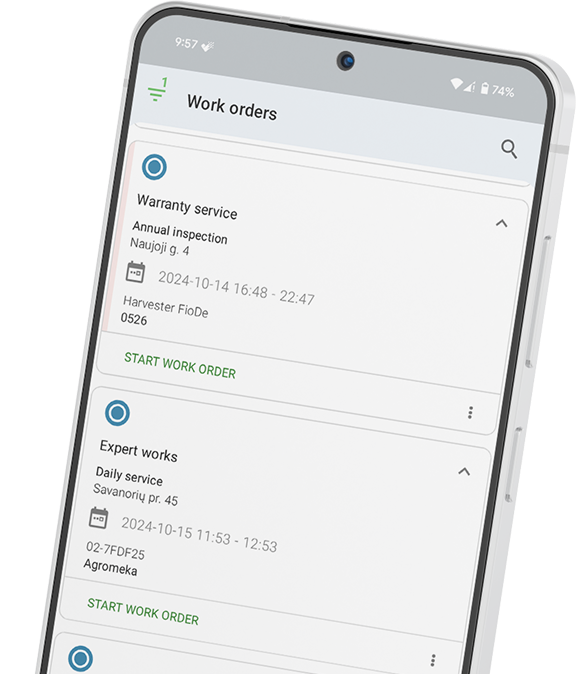
Field Service Management platforms such as Frontu provide this operational backbone. Dispatchers can view technician locations in real time, assign work orders instantly, and adjust schedules when emergencies arise. The system also ensures that technicians receive complete job information directly on their mobile devices, including customer history, equipment details, and service instructions.
The result is a dramatic improvement in technician productivity. Instead of calling the office for updates or searching through paperwork, technicians can focus entirely on completing the job. Reduced administrative friction translates directly into higher service capacity and lower overhead costs.
Operational efficiency ultimately determines how many jobs a company can complete within a day. Even small improvements in dispatching accuracy can significantly increase revenue without adding additional staff.
Many HVAC businesses struggle with profitability despite maintaining a busy schedule. A full calendar does not automatically translate into healthy margins. Pricing strategy plays a critical role in determining whether a company grows sustainably or simply works harder for limited financial return.
One common mistake is relying entirely on hourly pricing. While hourly rates appear straightforward, they often fail to capture the full cost of operating a service business. Labour expenses represent only a portion of total operational cost. Vehicle maintenance, insurance, dispatch operations, marketing, training, and equipment depreciation all contribute to the real cost structure.
Successful HVAC companies calculate their true labour cost before setting prices. This calculation includes technician wages, payroll taxes, benefits, training expenses, and the operational overhead required to support field operations. Only after understanding this baseline can a company determine sustainable service pricing.
Value-based pricing often produces stronger results than hourly billing. Customers are less concerned with the number of minutes a technician spends on site and more focused on solving their problem quickly and reliably. Pricing services based on value rather than time allows HVAC businesses to capture fair compensation for expertise and efficiency.
Another important financial driver is recurring revenue. Preventative maintenance agreements provide predictable income while strengthening long-term customer relationships. These contracts ensure that equipment receives regular servicing, reducing emergency repairs and extending system lifespan.
Maintenance agreements also improve technician utilisation during slower service periods. Scheduled inspections and maintenance visits keep technicians productive even when emergency calls decline.
Companies that actively promote preventative maintenance often experience lower customer churn and higher lifetime customer value. Over time, this recurring service model stabilises cash flow and makes long-term business planning far more reliable.
Healthy HVAC businesses therefore combine thoughtful pricing strategy with recurring service offerings. This balance supports both profitability and operational stability.
Technical expertise alone rarely generates enough new customers to sustain growth. HVAC companies operate in highly competitive local markets where visibility often determines which business receives the call.
Effective lead generation usually requires a combination of digital marketing and traditional referrals. Local Services Ads, search engine optimisation, and reputation management play a significant role in attracting customers who search online for immediate assistance.
Search engine optimisation remains particularly valuable because it captures high-intent demand. Customers who search for HVAC repair or installation services are typically ready to book a technician. Appearing prominently in these search results dramatically increases lead generation opportunities.
At the same time, referrals remain one of the most powerful marketing channels. Customers tend to trust recommendations from neighbours, family members, or local community groups. Encouraging satisfied clients to share their experience often produces higher-quality leads than paid advertising alone.
Online reviews further amplify this effect. Platforms such as Google Reviews and Yelp act as digital reputation signals. Businesses with consistent positive feedback appear more trustworthy, particularly when customers face urgent service needs.
However, marketing success cannot be measured solely by lead volume. Many HVAC companies generate large numbers of enquiries that fail to convert into profitable jobs. Tracking the connection between marketing campaigns and completed service work is therefore essential.
Integrating marketing data with Field Service Management systems enables owners to evaluate lead quality more accurately. When a new service request enters the system, it can be linked to its original marketing source. Over time, this data reveals which channels generate the most profitable customers.
This level of visibility allows HVAC businesses to invest marketing budgets more intelligently. Instead of spreading resources across many campaigns, owners can focus on channels that consistently produce high-value service contracts.
Successful HVAC marketing therefore combines visibility with measurement. Lead generation becomes significantly more effective when supported by operational data and real service outcomes.
The HVAC industry faces a persistent challenge in the form of skilled labour shortages. Qualified technicians are in high demand, and many businesses struggle to recruit and retain experienced professionals.
Technicians often leave companies not because of salary alone, but because of operational frustration. Outdated tools, unclear schedules, missing job information, and excessive paperwork create daily friction that reduces job satisfaction.
Providing technicians with modern digital tools significantly improves their working experience. When technicians receive service requests through mobile applications, they can access customer history, equipment specifications, and installation records instantly. This reduces uncertainty and allows them to diagnose issues more efficiently.
Digital service reports also eliminate unnecessary administrative tasks. Instead of returning to the office to complete paperwork, technicians can document work directly from the job site. Photos, inspection results, and customer signatures can all be captured digitally.
Autonomy plays an important role in technician satisfaction. When technicians have clear job instructions and easy access to information, they can work independently without constant phone calls to the office. This independence creates a stronger sense of professional ownership.
Career development further strengthens retention. Successful HVAC businesses invest in continuous training, certification programmes, and clearly defined career pathways. Technicians who see opportunities for advancement are far more likely to remain with the company.
Team stability has a direct impact on service quality. Experienced technicians complete jobs faster, diagnose problems more accurately, and build stronger relationships with customers. Over time, this expertise becomes a competitive advantage that is difficult for new market entrants to replicate.
Building a strong technician team therefore requires more than competitive salaries. It involves creating an operational environment where skilled professionals can perform their work efficiently and confidently.
HVAC businesses generate significant operational data every day. Work orders, technician schedules, service reports, invoices, and customer records all contain valuable information. Yet in many companies, this data remains scattered across spreadsheets, paper files, or disconnected software tools.
When operational data is fragmented, business owners struggle to identify performance trends. Important questions become difficult to answer. Which technicians complete the most jobs per day. Which services generate the highest profit margins. Which equipment types require the most frequent repairs.
Centralised digital platforms allow HVAC businesses to transform raw data into meaningful insights. Field Service Management systems collect operational information automatically as technicians complete their work.
Several performance indicators are particularly useful for HVAC companies. First-Time Fix Rate measures how often technicians resolve problems during the initial visit. A high FTFR indicates strong diagnostic skills and effective preparation before arriving on site.
Technician utilisation rate reveals how efficiently labour resources are deployed. When technicians spend too much time travelling or waiting for assignments, service capacity declines and operational costs rise.
Average job value helps owners evaluate pricing strategy and service mix. If average revenue per job begins to decline, it may indicate pricing issues or an increasing share of lower-margin work.
Without structured data collection, these insights remain hidden. Owners are forced to rely on intuition rather than measurable performance indicators.
Frontu’s real-time dashboards allow business leaders to monitor these metrics continuously. Instead of waiting for monthly financial reports, they can observe operational performance daily and respond quickly to emerging issues.
Data-driven decision making transforms HVAC businesses from reactive service providers into strategically managed organisations. Over time, this analytical approach leads to higher efficiency and stronger financial performance.
In many markets, HVAC services appear similar from a technical perspective. Most companies can repair a heating system or install an air conditioning unit. What truly differentiates successful businesses is the experience customers receive throughout the service process.
Communication plays a central role in customer satisfaction. When homeowners or facility managers request service, uncertainty can quickly become frustration. Customers want clear information about when a technician will arrive and what the repair process will involve.
Automated notifications significantly improve this experience. SMS updates can inform customers when technicians are on the way, reducing uncertainty and eliminating unnecessary waiting.
Digital service reports also enhance transparency. After completing a job, technicians can provide customers with detailed reports that include photos, inspection results, and recommendations for future maintenance. This documentation reinforces professionalism and builds trust.
Mobile invoicing further simplifies the service experience. Customers appreciate the ability to review and pay invoices immediately rather than waiting for paperwork to arrive later.
Ease of doing business often determines whether customers return for future services. When booking appointments, receiving updates, and completing payments requires minimal effort, customers develop strong loyalty toward the service provider.
HVAC companies that prioritise customer experience frequently benefit from higher review ratings and stronger referral networks. Positive service experiences encourage customers to recommend the company to neighbours and colleagues.
Over time, these relationships become one of the most valuable assets a business can develop.
The HVAC industry rewards technical expertise, but technical knowledge alone rarely guarantees business success. Owners who focus solely on installation and repair skills often find themselves overwhelmed by operational complexity as their companies grow.
Sustainable success emerges when technical capability is combined with structured operational management. Efficient dispatching, thoughtful pricing strategy, targeted marketing, strong technician development, and data-driven decision making form the foundation of a modern HVAC enterprise.
Digital platforms play an increasingly important role in supporting these capabilities. Field Service Management software connects scheduling, service execution, financial tracking, and customer communication into a unified system.
Companies that embrace this digital approach gain operational clarity that traditional workflows cannot provide. They understand exactly where revenue is generated, where inefficiencies occur, and how technician performance evolves over time.
The most successful HVAC owners therefore think beyond individual service jobs. They build organisations that operate with precision, transparency, and long-term scalability.
In a competitive service landscape, the businesses that thrive are those that professionalise their operations and treat service delivery as a coordinated system rather than a collection of individual tasks.
Well-managed HVAC companies typically aim for net profit margins between fifteen and twenty percent. Achieving this level requires careful control of labour costs, efficient technician scheduling, and pricing that reflects the true cost of service delivery.
A balanced marketing strategy works best. Search engine optimisation attracts customers who actively search for services, Local Services Ads provide immediate visibility in local markets, and referral programmes encourage satisfied customers to recommend your company.
Residential services usually generate higher job volume and faster sales cycles. Commercial contracts often involve larger project values and long-term maintenance agreements. Many successful HVAC companies operate in both segments to diversify revenue.
Franchises offer established branding, operational processes, and marketing support. However, they also involve franchise fees and reduced strategic independence. Independent businesses retain full control but must build their reputation from the ground up.
Scalable Field Service Management platforms such as Frontu support both small technician teams and large service fleets. These systems centralise dispatching, job tracking, and customer communication, allowing businesses to grow without operational bottlenecks.
Pricing should be reviewed at least twice per year. Changes in equipment costs, labour expenses, and fuel prices can significantly affect profitability.
Professional responses are essential. Acknowledge the customer’s concern, explain the steps taken to resolve the issue, and treat the feedback as an opportunity to improve internal processes. Transparent communication often turns dissatisfied customers into long-term advocates.



Link copied!

 Table of Contents