What Does VAV Stand for in HVAC?
Author: Serhiy Tereshchenko | 11 martie, 2026
In HVAC terminology, VAV stands for Variable Air Volume. It describes a method of delivering conditioned air to a space by adjusting the volume of air rather than constantly altering the temperature of the air itself.
This concept changed how large commercial buildings manage climate control. Instead of pushing the same quantity of air through every duct at all times, a Variable Air Volume system continuously adapts airflow based on the real demand in each zone. Offices that receive strong sunlight may require additional cooling, while shaded areas may require very little. A VAV system allows each zone to receive only the amount of air it actually needs.
For facility managers across Europe, the main benefit is operational efficiency. Fans do not run at full capacity continuously, which reduces electricity consumption and extends equipment life. At the same time, occupants experience more stable indoor temperatures because each room can respond independently to changes in occupancy, sunlight, or equipment heat load.
Because modern commercial buildings contain hundreds of individual zones, Variable Air Volume systems have become a standard choice in office complexes, hospitals, airports, and industrial facilities. Their performance, however, depends not only on the mechanical design but also on the quality of monitoring and maintenance processes.
At the centre of a Variable Air Volume system sits the Air Handling Unit. The AHU conditions air to a consistent supply temperature before distributing it through the building’s duct network. From there, the airflow travels to multiple terminal units known as VAV boxes.
Each VAV box serves a specific zone such as an office, corridor, or meeting room. Inside the box is a damper mechanism controlled by a motor or actuator. The damper regulates how much air passes into the space.
A thermostat located in the zone communicates with the VAV box. When the temperature rises above the desired setpoint, the damper opens further, allowing more cool air into the room. When the space reaches the target temperature, the damper closes slightly to reduce airflow.
Static pressure sensors installed within the ductwork provide another layer of control. These sensors measure pressure levels inside the duct system and send signals back to the AHU. If many dampers open simultaneously and demand more airflow, the sensors detect the pressure drop and instruct the main fan to increase speed. If fewer zones require cooling, fan speed decreases.
The result is a constantly balancing system that matches supply with demand across the entire building. Instead of a rigid airflow pattern, the system behaves more like a living network that adjusts in real time.
To understand the value of Variable Air Volume, it helps to compare it with the older Constant Air Volume approach.
A Constant Air Volume system supplies the same amount of air at all times and controls temperature by heating or cooling that air before it enters the room. This design is mechanically simple and was historically common in buildings with large open spaces such as theatres, factories, or lecture halls.
However, the constant airflow requirement forces the system’s fans to operate at near maximum capacity throughout the day. Energy consumption rises significantly as a result.
Variable Air Volume systems operate differently. Air temperature delivered by the AHU remains relatively stable, while each VAV box controls airflow to match the needs of its zone. Because most rooms do not require maximum cooling simultaneously, the main fans rarely run at full output.
The practical difference becomes obvious in large office buildings. A south facing conference room with twenty people inside may require significant cooling, while a nearby archive room may require very little. A VAV system handles both conditions simultaneously without wasting energy.
This zoned control also improves occupant comfort. People working in different areas of the building are no longer forced to accept the same temperature profile. Instead, each zone reacts independently.
Energy efficiency in modern buildings rarely depends on a single piece of equipment. It emerges from how different technologies communicate with each other.
Variable Air Volume systems are often integrated with Building Automation Systems. A BAS platform collects data from sensors, thermostats, and equipment controllers across the facility and uses that information to optimise building performance.
When integrated properly, the BAS can detect occupancy patterns and adjust airflow automatically. If meeting rooms remain empty during certain hours, the VAV boxes serving those rooms can reduce airflow to a minimum level. This lowers fan power requirements and reduces cooling demand.
The same principle applies during evenings or weekends. Instead of cooling an entire building at full capacity, the system can operate only where needed.
This approach aligns with the sustainability goals increasingly adopted by European property developers. Energy efficient HVAC design contributes directly to certifications such as LEED or BREEAM, which evaluate buildings based on environmental performance.
Variable Air Volume systems therefore serve not only as a mechanical solution but also as a strategic component of building energy management.
Despite their efficiency, VAV systems introduce a level of mechanical and control complexity that requires careful oversight.
One of the most common issues technicians encounter is a stuck damper. When a damper fails to move freely, the affected zone may receive either too much or too little airflow. Occupants may notice rooms becoming unusually cold or uncomfortably warm despite thermostat adjustments.
Sensor drift represents another challenge. Over time, temperature sensors and airflow sensors can lose calibration accuracy. Even small measurement errors may cause the system to respond incorrectly, leading to inefficient airflow control.
Control board failures also occur in older VAV boxes. Electronic components that regulate actuator movement may deteriorate after years of continuous operation.
When buildings contain hundreds of VAV boxes, identifying these problems manually becomes difficult. Maintenance teams often rely on historical service records to understand which units have experienced repeated faults.
This is where digital field service tools begin to play a significant role. Technicians can track maintenance history, record sensor readings, and log repair activities for each terminal unit within the facility. Over time, these records reveal patterns that help engineers diagnose recurring issues more quickly.
The performance of a Variable Air Volume system depends heavily on routine inspection and calibration.
Dampers require periodic recalibration to ensure their open and closed positions match the signals received from thermostats. If calibration drifts, airflow regulation becomes inaccurate.
Actuators must also be tested to confirm they respond correctly to control signals. In older buildings that still rely on pneumatic systems, air pressure levels must be monitored to maintain proper actuator movement.
Where VAV boxes include reheat coils, cleaning becomes essential. Dust accumulation on coils reduces heat transfer efficiency and forces the system to consume additional energy.
Large facilities may contain hundreds of terminal units distributed across multiple floors. Without a structured maintenance schedule, some units may remain uninspected for extended periods.
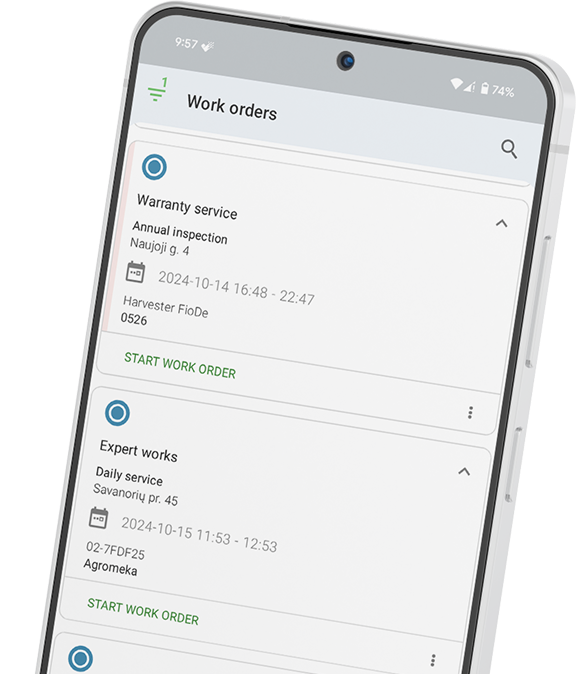
Field Service Management platforms help address this operational challenge. Digital inspection checklists ensure technicians verify the same components during every visit. Asset tagging allows each VAV box to be identified quickly, while maintenance schedules ensure recurring inspections occur on time.
Solutions such as Frontu enable service teams to maintain a clear overview of all HVAC assets within a building. Technicians can access equipment history directly on mobile devices while standing next to the unit they are servicing. This visibility reduces diagnostic time and helps ensure no component is overlooked.
Variable Air Volume systems have become the backbone of climate control in modern commercial buildings. By regulating airflow instead of continuously adjusting air temperature, they deliver both energy efficiency and improved comfort for occupants.
However, the effectiveness of a VAV system depends on careful monitoring of its many components. Dampers, sensors, actuators, and control boards must operate together as a coordinated network.
For facility managers responsible for large properties, the mechanical system alone is not enough. Digital infrastructure that supports inspection routines, maintenance tracking, and technician coordination becomes equally important.
When Variable Air Volume technology is paired with professional maintenance practices and modern field service management tools, buildings achieve the full potential of efficient and reliable HVAC operation.
Most VAV boxes primarily control cooling airflow. However, some units include reheat coils that allow them to warm the air slightly before it enters the space. This feature is commonly used in perimeter offices where heating may be required during colder periods.
In most cases, VAV systems are quieter. Because fans operate at reduced speeds for much of the time, airflow noise and mechanical vibration tend to be lower compared with Constant Air Volume systems that run continuously at high capacity.
A dual duct VAV box receives both warm and cool air from separate ducts and mixes them to achieve the desired temperature in a zone. This design is typically found in buildings where heating and cooling demands vary widely throughout the day.
Installation costs are generally higher than simpler HVAC systems because each zone requires its own terminal unit and control components. However, the energy savings achieved through variable airflow typically offset the initial investment over time.
Variable Air Volume systems regulate airflow delivered through ductwork. Variable Refrigerant Flow systems distribute refrigerant directly to indoor units instead of using air ducts. Both aim to improve efficiency, but they operate using different mechanical principles.
Signs include uneven room temperatures, persistent airflow noise from vents, or a thermostat that appears unresponsive. Technicians usually confirm the issue by inspecting the actuator movement and measuring airflow within the duct.
Frontu supports HVAC maintenance teams by providing digital checklists, asset tracking, and maintenance history for each VAV box in a facility. Technicians can record inspection data directly on site, helping building managers maintain consistent oversight of complex HVAC infrastructures.



Link copied!

 Table of Contents