
 Table of Contents
Supaprastinkite savo lauko paslaugų operacijas.
Mūsų integracijų sąrašas dažnai atnaujinamas. Daugiau informacijos apie kiekvieną integraciją rasite atskirame puslapyje.

Author: Serhiy Tereshchenko | 23 kovo, 2026
The HVAC trade has changed quietly but dramatically over the past decade. A technician once arrived at a job site carrying folders of manuals, laminated P-T charts, handwritten service histories, and a mobile phone used mainly for calls. Today the most important tool often fits in a pocket. Smartphones and tablets now function as a technician’s technical library, diagnostic assistant, and operational hub.
This shift is not simply about convenience. HVAC service apps fundamentally reshape how technicians work in the field and how service companies operate behind the scenes. Calculations that previously required printed charts can now be completed in seconds. Troubleshooting information is searchable instantly. Job reports, once filled out on paper in the van, are completed digitally and shared with the office in real time.
For businesses, the advantages are equally significant. Service apps reduce administrative friction, shorten response times, and eliminate a surprising amount of wasted travel. Technicians spend less time driving back to the office for paperwork and more time solving customer problems. Many companies describe this reduction in unnecessary travel as cutting down “windshield time”, which directly improves daily productivity.
The most effective HVAC apps now combine technical knowledge with operational coordination. A technician may calculate airflow using one tool, check a refrigerant chart in another, and close the job through a field service management platform. Together, these digital tools form what many technicians call their modern toolbelt.
The following section explores several of the most useful HVAC apps available today. Some focus on technical calculations, while others address the broader challenge of managing field service operations.
HVAC professionals rely on a wide range of data while working in the field. System specifications, refrigerant behaviour, airflow calculations, manufacturer documentation, and job details all influence a technician’s decisions during service work.
While specialised calculators remain valuable, the most powerful solutions connect technical insight with operational workflow. A technician can diagnose an issue, log the service activity, document the repair, and send the final report without switching between disconnected systems. This combination of technical and operational capability is what defines the modern HVAC service app ecosystem.
Bluon has become one of the most widely used technical resources among HVAC technicians. Instead of searching through manufacturer manuals or outdated documentation, technicians can access an enormous database of system information directly through the app.
The platform includes manuals and parts lists for hundreds of thousands of HVAC models. This makes it particularly valuable when servicing older equipment where documentation may no longer be readily available. Technicians can quickly confirm component compatibility or locate correct replacement parts without leaving the job site.
Another defining aspect of Bluon is its community knowledge base. Technicians frequently share troubleshooting experiences and repair solutions for complex equipment failures. This real world insight often provides answers that traditional manuals cannot.
The platform also offers live technical support, allowing technicians to consult experienced specialists when diagnosing unusual system behaviour. This level of collaborative knowledge turns Bluon into something closer to a technical network than a simple reference app.
Accurate refrigerant charging remains critical to HVAC system efficiency and reliability. Small deviations can significantly affect system performance and long term component health.
HVAC Check & Charge, developed by Emerson, helps technicians calculate proper refrigerant levels based on system conditions. The application supports common refrigerants including R-22, R-410A, R-32, and R-454B.
Technicians input field measurements such as suction pressure, liquid pressure, and temperature readings. The app then calculates correct subcooling and superheat values. This allows technicians to verify whether a system is operating within optimal parameters.
The result is more consistent service quality. Instead of relying solely on manual charts or experience based estimation, technicians can confirm precise charging levels with reliable calculations.
HVAC Buddy is widely appreciated for its simplicity and reliability. At its core, the app functions as a digital pressure temperature chart combined with several troubleshooting utilities.
Technicians often need quick access to refrigerant pressure relationships when diagnosing cooling issues. HVAC Buddy provides immediate reference values across multiple refrigerants, allowing technicians to evaluate system readings without carrying printed charts.
Beyond refrigerant calculations, the app includes airflow and combustion diagnostics. These tools assist technicians when evaluating furnace operation or identifying airflow restrictions in duct systems.
Because of its straightforward design, many experienced technicians treat HVAC Buddy as a trusted digital replacement for traditional field references.
Hydronic heating systems present a different set of engineering challenges compared to traditional forced air installations. Calculating water flow rates, pressure drops, and valve sizing requires accurate data and specialised knowledge.
HyTools focuses specifically on hydronic system design and troubleshooting. The app includes several calculation modules used by technicians working with water based heating and cooling systems.
Technicians can estimate flow rates through piping networks, evaluate pressure losses across valves, and determine correct component sizing. This capability becomes particularly valuable when working on commercial heating installations or complex boiler systems.
For specialists in hydronic HVAC environments, HyTools offers a level of technical precision rarely found in general purpose service applications.
Carrier Enterprise provides CE HVAC Pro+ as a connection point between technicians and its extensive parts inventory network.
Instead of calling suppliers or manually checking stock availability, technicians can search for parts directly within the application. The system provides real time inventory information across nearby distribution centres.
A particularly useful feature is the scanning functionality. Technicians can scan product barcodes or equipment labels to identify compatible replacement components quickly.
By reducing time spent locating parts, the app shortens repair cycles and improves first visit resolution rates.
Proper duct sizing is essential for maintaining balanced airflow and system efficiency. Poor duct design often leads to comfort issues, increased energy consumption, and premature equipment wear.
HVAC Duct Sizer simplifies the process of calculating duct dimensions based on airflow requirements. Technicians can select friction rate, velocity targets, or static pressure limits when determining correct duct sizes.
This functionality proves particularly useful during renovation work or system upgrades where existing ductwork may not meet modern performance standards.
Instead of returning to the office for calculations, technicians can evaluate airflow design adjustments directly on site.
MeasureQuick represents a more advanced approach to HVAC diagnostics. Rather than focusing on individual calculations, the platform integrates readings from multiple measurement probes to analyse overall system performance.
Technicians connect wireless sensors that measure pressure, temperature, and airflow. MeasureQuick then aggregates this data to generate a comprehensive system evaluation.
The application can produce performance scores that help technicians communicate equipment condition to customers. Instead of presenting raw numbers, technicians can explain system efficiency in clear, understandable terms.
This transparency improves customer trust while also guiding technicians toward the most effective repair decisions.
Fieldpiece JobLink works in combination with Fieldpiece wireless measurement tools. These sensors transmit system data directly to a technician’s mobile device.
One of the most practical advantages is remote monitoring. Technicians can view system readings from distances approaching one thousand feet, allowing them to analyse performance without remaining physically next to the equipment.
This capability becomes extremely useful during system commissioning or when evaluating equipment located in difficult access areas.
By collecting readings continuously, JobLink helps technicians observe system behaviour over time rather than relying on single measurements.
Despite the availability of complex diagnostic apps, many technicians still rely on simple reference tools for everyday service work.
The Refrigerant Slide Chart app replicates the traditional slide rule charts used for decades in HVAC service. It provides quick pressure temperature relationships across a wide range of refrigerants.
Because of its minimal interface and fast access to data, the application remains a reliable field reference. Technicians can confirm refrigerant characteristics in seconds without navigating through complex menus.
For professionals who prefer straightforward tools, this digital chart continues to serve as a dependable resource.
While technical apps focus on diagnosing and repairing equipment, another category of tools addresses the operational side of HVAC service businesses.
Frontu represents this broader approach. Instead of helping technicians repair a system directly, the platform coordinates the entire service workflow.
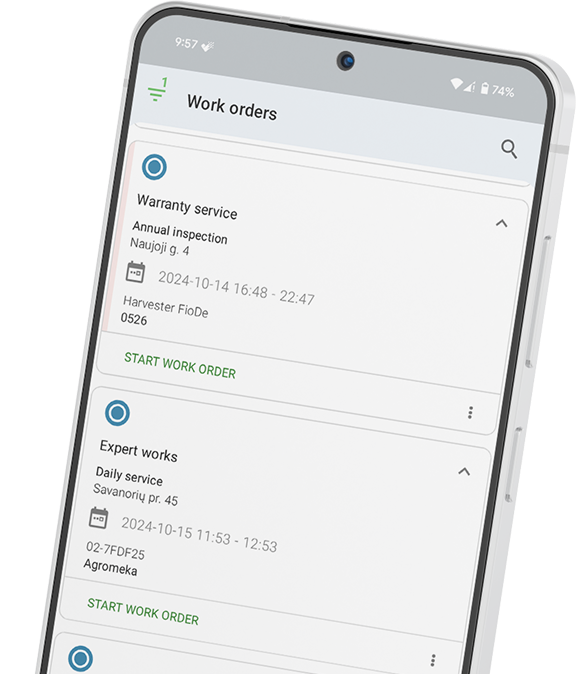
The application manages scheduling, dispatching, inventory tracking, and billing within a single mobile interface. Technicians receive work orders directly on their devices, complete digital checklists during service, and submit job reports immediately after finishing the work.
For office teams, this real time visibility transforms how service operations are managed. Dispatchers can track technician locations through GPS integration, adjust schedules dynamically, and ensure the right technician reaches the right job at the right time.
In this sense, Frontu acts as the operational brain of the service organisation, connecting technical work performed in the field with the administrative processes required to run the business efficiently.
Many HVAC technicians eventually accumulate a long list of specialised apps. One tool calculates duct sizing, another displays refrigerant charts, and another records job details. While each application solves a specific problem, the combined workflow often becomes fragmented.
This fragmentation leads to what technicians sometimes describe as app fatigue. Switching between multiple applications during a service call slows down the workflow and increases the risk of missing critical information.
All in one field service management platforms address this issue by consolidating operational processes. A technician can receive the work order, access equipment history, record diagnostic notes, capture photos of the repair, and generate the invoice from a single interface.
Another major advantage is real time data synchronisation. When job information is recorded within a unified platform, office teams can immediately see the status of every service call. Dispatchers know when a technician finishes one task and becomes available for the next assignment.
This continuous flow of information also improves billing speed. Job data recorded during the service visit can automatically populate invoices, reducing administrative delays and accelerating payment cycles.
For growing HVAC companies, the value of this operational coordination often surpasses the benefits of isolated calculation tools.
The mobile experience provided by Frontu focuses specifically on field conditions faced by HVAC technicians. Many service calls occur in locations where internet connectivity is unreliable. Mechanical rooms, basements, and rural installations frequently lack stable mobile signals.
To address this challenge, the application supports offline functionality. Technicians can continue working even when no internet connection is available. Work orders, checklists, and documentation remain accessible, and all data synchronises automatically once connectivity returns.
Digital job checklists also play an important role in maintaining consistent service quality. Companies can embed their standard operating procedures directly into the app. Technicians follow step by step inspection processes that ensure safety checks and system diagnostics are completed correctly.
Photo documentation and digital signature capture further streamline the service workflow. Technicians can record visual proof of completed work and collect customer approval immediately after finishing the repair.
Route optimisation provides another practical benefit. By integrating GPS navigation, the system helps technicians reach job locations more efficiently. Reduced travel time lowers fuel consumption and allows technicians to complete more service calls during the day.
Together these capabilities transform the smartphone into a complete operational tool for field technicians.
Many HVAC technicians begin with free mobile applications. Simple calculators, refrigerant charts, and troubleshooting references are widely available without cost. For independent technicians or small operations, these tools can provide immediate value.
However, free apps often come with limitations. Technical support may be minimal, updates may occur irregularly, and data typically remains isolated within each application.
When technicians rely on several free tools simultaneously, information rarely flows between them. Service reports must still be written manually, and administrative tasks remain disconnected from technical diagnostics.
Paid HVAC service platforms address these limitations by integrating operational processes. Scheduling, diagnostics, job documentation, and invoicing occur within a single environment.
Research within the field service sector suggests that technicians using integrated service software can save roughly eleven hours of administrative work each week. For a service company operating several technicians, the cumulative productivity gains quickly justify the subscription cost.
Introducing new software into an established service team requires thoughtful planning. Technicians who have worked with paper systems or familiar tools may initially resist change.
Modern HVAC applications reduce this friction through intuitive interface design. Most technicians already rely heavily on smartphones in daily life, which makes mobile software adoption relatively natural.
A phased rollout approach often works best. Companies begin by introducing the platform to a small group of technicians who test the system in real field conditions. Their feedback helps refine workflows before expanding the rollout to the entire team.
Training sessions should focus on practical tasks technicians perform daily. Dispatching jobs, completing digital checklists, documenting repairs, and submitting service reports are usually the most important features during early adoption.
Choosing a field service management platform designed specifically for technician workflows greatly reduces the learning curve.
The definition of an HVAC technician has expanded beyond mechanical expertise alone. Modern professionals must interpret technical data, document service work digitally, and coordinate closely with operational systems that manage schedules, inventory, and customer communication.
Specialised diagnostic apps remain valuable tools for calculations and system analysis. However, the growing complexity of HVAC service operations has increased the importance of integrated field service management platforms.
For companies seeking efficiency and scalability, the most effective approach combines technical applications with a unified operational system. The technician repairs the equipment, but the platform ensures the entire service business operates smoothly.
In the modern HVAC environment, the smartphone has become more than a convenience. It is the control centre for both technical performance and operational efficiency.




Mūsų integracijų sąrašas dažnai atnaujinamas. Daugiau informacijos apie kiekvieną integraciją rasite atskirame puslapyje.
Link copied!