

 Table of Contents
Bring simplicity to your field service operations.
Our list of integrations is updated frequently. Explore each integration in its own separate page for more information.
Heavy equipment sits at the centre of construction, agriculture, and industrial operations across Europe. When a machine stops, revenue stops with it. The real question is not whether maintenance should happen, but whether it is controlled or left to chance. Reactive repairs often appear cheaper in the short term, yet they quietly erode margins through downtime, emergency call-outs, and shortened asset life. A structured heavy equipment maintenance schedule replaces uncertainty with predictability, allowing businesses to protect utilisation rates and plan resources with confidence. Increasingly, digital systems are replacing handwritten logs, giving managers a clear, real-time view of asset condition and performance across multiple sites.
A reliable maintenance schedule is built on triggers rather than assumptions. Engine hours, mileage, and calendar intervals form the foundation, but they should never be applied blindly. A loader operating in dusty quarry conditions will degrade differently from one used intermittently on municipal work. Manufacturer recommendations provide a baseline, yet real-world usage defines the true rhythm of servicing.
In practice, European fleets are rarely uniform. Mixed environments, varying operator habits, and seasonal demand all influence wear patterns. This is why a rigid schedule often fails. The most effective approach blends standard intervals with operational context, adjusting service frequency based on workload intensity and environmental exposure. Once documented properly, this schedule becomes more than a checklist. It becomes a control system that supports consistent field service execution and reduces dependency on individual judgement.
Maintenance procedures must be consistent, repeatable, and clearly defined. Fluid levels are the first line of defence, as lubrication failures remain one of the most common causes of breakdown. Filters must be replaced according to schedule, not when symptoms appear. Hydraulic systems require close monitoring, as pressure inconsistencies often signal deeper issues that escalate quickly if ignored.
Structural inspections are equally important. Undercarriages, tyres, and load-bearing components carry the cumulative stress of daily operations. Small cracks, uneven wear, or loose fittings can develop into critical failures if left unchecked. Standardising these procedures ensures that every technician, regardless of experience or location, follows the same process.
When maintenance is executed consistently and logged properly, asset lifespan can be extended significantly. The impact is not only technical but financial. Fewer breakdowns translate into higher availability, and higher availability directly improves return on investment across the fleet.
Daily inspections are often underestimated, yet they are the earliest opportunity to detect problems. A quick walk-around before operation can reveal leaks, loose bolts, or visible damage that would otherwise go unnoticed until failure occurs.
Operators play a crucial role here. They are closest to the equipment and best positioned to identify irregularities. When these checks are performed consistently, minor issues are resolved before they escalate. This reduces the need for emergency repairs and protects scheduled work from disruption.
These daily observations should not exist in isolation. When captured and fed into a broader maintenance system, they provide valuable input for planning future service intervals. In this sense, daily inspections act as a continuous feedback loop, strengthening the entire maintenance programme.
Paper-based logs introduce friction at every stage. Entries are delayed, incomplete, or lost. Data remains fragmented across teams, making it difficult to track patterns or verify compliance. Over time, this lack of visibility leads to missed services and reactive decision-making.
Digital logs address these limitations by creating a single, accessible record of each asset’s maintenance history. Every service, inspection, and repair is stored in one place, enabling managers to analyse trends and make informed decisions. This becomes particularly valuable during audits, resale evaluations, or warranty claims.
Beyond visibility, digital systems enable a shift towards predictive thinking. Instead of reacting to failures, teams begin to anticipate them. Maintenance planning becomes proactive rather than reactive, aligning operational goals with long-term asset performance.
Managing maintenance across multiple assets and locations requires coordination that manual systems cannot sustain. Frontu centralises this process by automating maintenance scheduling based on real-time data and predefined intervals.
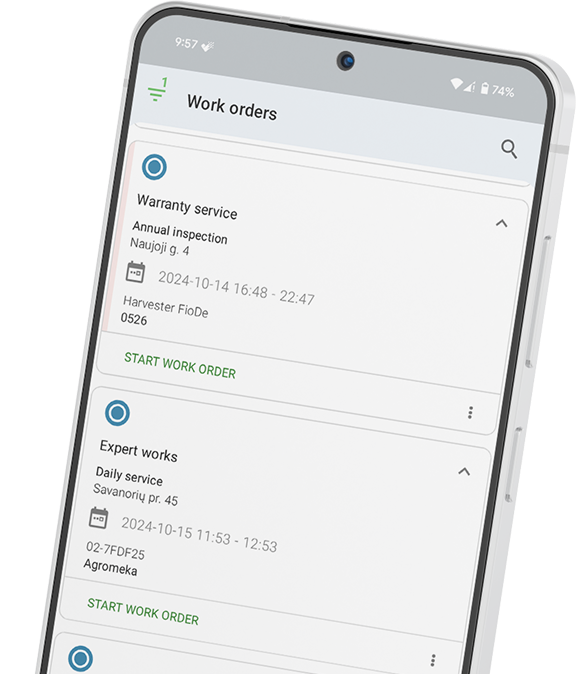
Technicians receive tasks directly on their mobile devices, complete with structured checklists that ensure no step is overlooked. As work is completed, parts usage and service details are recorded instantly, removing delays and reducing administrative overhead. This creates a continuous flow of accurate data from the field to management.
For decision-makers, this visibility answers a critical question. Whether automated scheduling can reduce administrative burden while improving equipment availability becomes measurable rather than theoretical. By connecting scheduling, execution, and reporting, Frontu transforms maintenance from a reactive function into a controlled, data-driven operation.
Maintenance is often treated as a cost to be minimised, yet its real value lies in what it prevents. Downtime, missed deadlines, and premature asset replacement all carry far greater financial consequences than planned servicing.
A structured maintenance approach ensures that equipment remains where it should be, in the field generating value. By combining clear schedules, standardised procedures, and digital tools, businesses gain control over both performance and cost.
The opportunity is straightforward. Evaluate current processes, identify gaps in visibility or consistency, and consider how a more disciplined approach could reduce unplanned downtime. Field service management solutions provide the framework to simplify this transition and support long-term operational stability.
Oil change intervals depend on both manufacturer guidance and actual usage conditions. Equipment operating under heavy loads or in harsh environments often requires more frequent changes than standard recommendations suggest.
Preventive maintenance follows a predefined schedule based on time or usage. Predictive maintenance uses real-time data and performance indicators to anticipate failures before they occur.
Failures are often linked to poor lubrication, cooling system issues, and missed inspections. These factors typically develop gradually and can be prevented with consistent maintenance.
A centralised digital platform helps manage different asset types by aligning manufacturer recommendations with real usage data, ensuring each machine receives appropriate attention.
Budgets vary by industry and usage, but consistent preventive maintenance typically reduces total lifecycle costs by avoiding expensive breakdowns and extending asset life.
When issues are identified early, repairs can be scheduled without disrupting operations. This helps keep projects on track and avoids delays caused by unexpected failures.
Even smaller fleets benefit from improved visibility and record accuracy. Digital systems scale easily and provide long-term value by supporting better decision-making and compliance.




Our list of integrations is updated frequently. Explore each integration in its own separate page for more information.
Link copied!
Join 10,000+ FSM leaders. Subscribe to our monthly expert-led newsletter. We find and report on case studies, success stories and playbooks that are working out there right now.