

 Table of Contents
Bring simplicity to your field service operations.
Our list of integrations is updated frequently. Explore each integration in its own separate page for more information.
Across European field operations, equipment inspections are rarely questioned, yet they are often misunderstood. They are treated as routine paperwork rather than a core operational discipline. In reality, inspections sit at the centre of both safety and profitability. When carried out properly, they prevent failures that disrupt projects, damage assets, and put people at risk.
A missed inspection is not just a procedural gap. It can translate into halted operations, regulatory penalties, or even long-term reputational damage. For organisations operating under strict EU safety frameworks, the cost of non-compliance extends beyond fines. It affects contract eligibility, insurance exposure, and workforce trust.
The real shift happens when inspections move from being reactive documentation to proactive control. Businesses that adopt structured and digital inspection processes turn compliance into a measurable advantage. Instead of asking whether inspections are complete, they begin to understand what inspection data reveals about asset performance and operational risk.
A reliable inspection programme is built on three distinct layers, each serving a different operational purpose.
Daily inspections, often carried out as pre-start walk-arounds, are designed to catch immediate risks. These checks are practical and fast, focusing on visible issues such as leaks, tyre condition, warning signals, and obvious structural concerns. In many EU markets, these checks are expected to be completed by operators before equipment is used, forming the first line of defence against incidents.
Periodic inspections, typically conducted monthly or at defined usage intervals, go deeper. These checks look beyond surface-level issues and focus on wear patterns, component performance, and early signs of failure. They are essential for preventive maintenance strategies and help reduce unplanned downtime across fleets.
Annual inspections, often mandated by regulatory bodies or insurance requirements, provide formal certification of equipment condition. These inspections are usually performed by certified professionals and are critical for compliance in sectors such as construction, lifting equipment, and heavy machinery operations.
When these three layers are aligned through consistent checklists and reporting standards, they form a complete safety net. Gaps between them create blind spots where failures can develop unnoticed.
An inspection checklist is only valuable if it is actually used in the field. Overly complex forms tend to be ignored or rushed, while overly simple ones fail to capture meaningful data. The balance lies in clarity and relevance.
Effective checklists focus on critical components that directly impact safety and performance. Hydraulics, braking systems, safety indicators, and structural elements must always be covered with precision. Each checkpoint should leave no ambiguity about what constitutes a pass or fail outcome. Vague language leads to inconsistent reporting and unreliable data.
In practice, the most effective checklists are tailored to specific equipment types. A crane requires a different level of detail compared to a service vehicle or agricultural machinery. By adapting checklists to the asset, organisations ensure that industry-specific risks are addressed without overwhelming technicians.
Consistency across teams is equally important. When every technician follows the same structured checklist, the data becomes comparable. This allows managers to identify patterns, recurring issues, and potential weaknesses in maintenance practices.
Paper-based inspection systems still exist across many European operations, particularly in sectors with long-established workflows. However, their limitations are clear. Handwritten notes are often incomplete or illegible. Physical logs are easily misplaced. Data entry delays mean that issues identified in the field may not reach decision-makers until it is too late.
Digital inspection tools remove these barriers. Mobile-first systems allow technicians to complete inspections directly on-site, capturing accurate data in real time. Photos, annotations, and structured inputs replace vague descriptions and reduce the risk of misinterpretation.
The immediate availability of inspection data changes how organisations respond to defects. Instead of waiting for paperwork to be processed, managers can act as soon as an issue is recorded. This reduces downtime and prevents minor faults from escalating into major failures.
Another overlooked factor is time efficiency. Technicians spend less time filling out forms and more time on productive work. Over the course of a year, this translates into a significant reduction in non-billable hours tied to administrative tasks.
Modern inspection workflows require more than digitisation. They require orchestration across the entire service lifecycle.
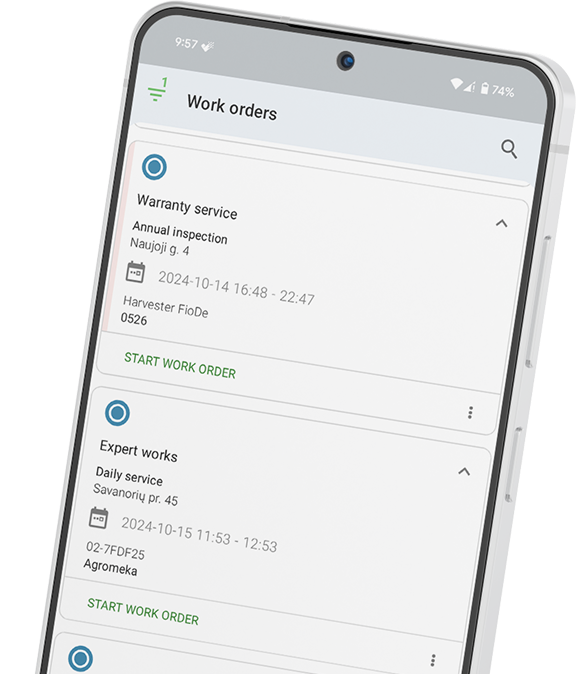
Frontu enables organisations to build structured inspection processes directly into their daily operations. Managers can create customised checklists tailored to each asset type and ensure that inspections are completed before any job is marked as finished. This removes reliance on manual follow-ups and reduces the risk of skipped checks.
A key advantage lies in automated defect reporting. When an inspection item fails, the system can immediately trigger a follow-up action. This may involve generating a maintenance task, notifying a supervisor, or scheduling further diagnostics. The transition from detection to resolution becomes seamless.
Real-time visibility also changes how asset performance is managed. Instead of reacting to breakdowns, organisations can monitor recurring issues and intervene earlier. This has a direct impact on asset lifespan, reducing the frequency of costly replacements and improving overall fleet reliability.
For EU-based operations dealing with cross-border projects and diverse regulatory requirements, having a centralised inspection system ensures consistency and audit readiness across all locations.
Equipment inspections should not be viewed as an obligation imposed by regulators. They are a source of operational intelligence that, when used correctly, improves safety, efficiency, and profitability.
Organisations that treat inspections as a strategic function achieve greater control over their assets. They reduce unplanned downtime, maintain higher safety standards, and make better-informed decisions about maintenance and procurement.
The difference lies in execution. Structured processes, clear checklists, and digital tools transform inspections from routine tasks into a competitive advantage. Field service management platforms provide the foundation for this shift, enabling businesses to operate with greater precision and confidence.
Heavy equipment should be inspected daily before use, with additional periodic checks carried out at defined intervals based on usage or manufacturer recommendations. Annual inspections are typically required for compliance and certification.
Failure can result in fines, enforced shutdowns, and legal liability. In European contexts, similar outcomes apply under national safety authorities, including project delays and loss of operational licences.
Daily inspections are usually performed by operators. More detailed or legally required inspections must be conducted by certified professionals, depending on the equipment and jurisdiction.
Yes, modern systems can trigger alerts based on time intervals, usage data, or inspection results, ensuring that no required check is missed.
Digital records provide timestamped, easily accessible documentation, often supported by images and detailed logs. This simplifies audits and demonstrates compliance without manual retrieval.
Manual processes consume significant time through form completion, data entry, and storage management. Digital systems reduce this overhead and allow technicians to focus on higher-value tasks.
Yes, predictable scheduling allows maintenance to be planned around operational needs, reducing unexpected downtime and improving overall fleet utilisation.




Our list of integrations is updated frequently. Explore each integration in its own separate page for more information.
Link copied!
Join 10,000+ FSM leaders. Subscribe to our monthly expert-led newsletter. We find and report on case studies, success stories and playbooks that are working out there right now.