

 Table of Contents
Bring simplicity to your field service operations.
Our list of integrations is updated frequently. Explore each integration in its own separate page for more information.
Two service managers start the same Monday in very different ways.
The first opens a report from Friday morning. The data is already three days old. A missed SLA, a delayed job, and a stock issue already hurt the customer before the manager even saw the problem.
The second opens a live dashboard. Every active job updates in real time. Three jobs show SLA risk. One technician runs late. A key part has reached its stock limit. The manager acts before the customer notices an issue.
Real-time analytics in service operations means teams can see operational data the moment technicians create it. Managers no longer wait for end-of-day reports or weekly reviews. They make decisions while work is still in progress.
This shift matters for any field service team with more than a few technicians or strict response targets.
Many teams think real-time analytics means complex BI software and costly custom dashboards.
In field service, the meaning is far simpler.
Real-time analytics means technicians update jobs in the field, and managers see those updates at once. That includes job status, labour time, parts use, and technician location.
The system turns live field activity into clear operational insight.
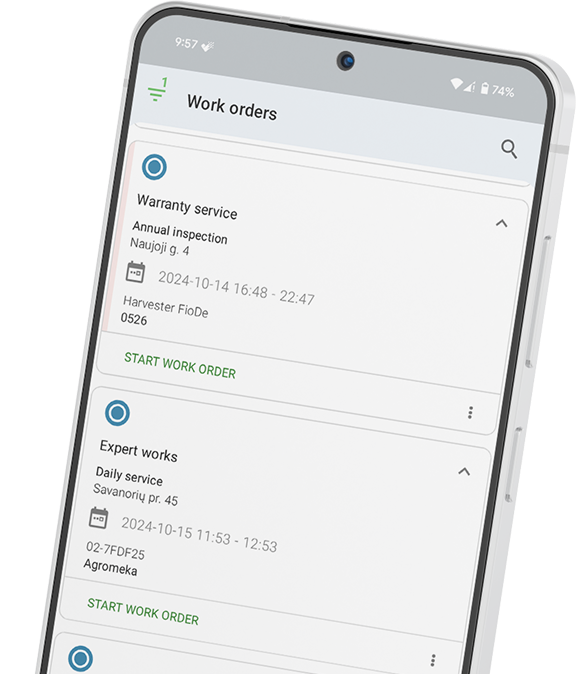
This only works when technicians capture data through a mobile-first field service system. Paper forms and delayed updates break the process. Real-time dashboards depend on live data flow from the field.
Retrospective reports help teams study trends after work ends. They support monthly reviews and long-term planning. They do not help managers stop problems during the workday.
Real-time analytics shows issues while they develop.
A dispatcher can see that a technician runs 90 minutes behind schedule. Another technician may sit idle nearby. A delayed job may approach SLA breach. The manager can react before the customer feels the impact.
This visibility enables three major operational actions.
First, teams can prevent SLA breaches before they happen. The system alerts dispatchers when a job risks missing its response or fix target.
Second, managers can rebalance workloads during the day. One overloaded technician can hand work to another with free capacity.
Third, teams can escalate stock issues early. If a job stalls due to a missing part, procurement can act before delays spread further.
The live job board acts as the control centre for field operations.
Managers can see every active job in one place. The board shows job status, assigned technician, current progress, and SLA timing.
This replaces the old process where dispatchers call technicians for updates throughout the day.
Those calls waste time and interrupt work. A live board removes that friction.
The board only works when technicians update jobs through their mobile app in real time.
SLA alerts provide one of the highest-value tools in field service operations.
The system tracks committed response and resolution targets automatically. If a job risks missing its deadline, the alert triggers early enough for action.
A technician may still sit 45 minutes away from a site with only 30 minutes left before breach. The dispatcher receives a warning before the SLA fails.
Without automated tracking, dispatchers must monitor every job manually. That becomes impossible once teams handle dozens of concurrent jobs.
Live technician tracking helps dispatchers make fast assignment decisions.
Managers can see each technician’s location, active job, and remaining workload.
When urgent work appears, dispatchers no longer need several phone calls to find available staff.
They simply identify the nearest technician with free capacity and assign the job instantly.
The update appears in the technician’s mobile app within seconds.
Stock shortages remain one of the main causes of repeat visits and failed first-time fixes.
Real-time inventory alerts reduce that risk.
When technicians log part usage against a job, the system updates inventory levels at once. If stock falls below a defined threshold, the system sends an alert automatically.
Operations and procurement teams can react before shortages affect future jobs.
This process links field consumption directly with stock control.
Teams must first capture job data digitally in the field.
Technicians should update job status, labour hours, parts use, and completion details through a mobile FSM app.
Without reliable field updates, dashboards become incomplete and misleading.
Start with the alerts that solve the most costly operational failures.
Most teams should begin with SLA breach warnings, jobs running over estimate, and stock-out alerts.
These three areas affect customer satisfaction, technician productivity, and operational cost.
Technology alone does not improve operations.
Managers need a consistent review process around live data.
A dispatcher who checks the live board every 30 minutes can prevent more service failures than a team relying only on weekly reporting.
Real-time analytics delivers value when teams act on the data immediately.
Frontu builds real-time analytics directly into daily field operations.
The platform updates job statuses instantly from technician mobile app activity. Managers can track SLA risk through configurable alerts and monitor technicians through a live location view.
Frontu also connects inventory activity with field work. When technicians consume parts, stock levels update automatically. Reorder alerts trigger before shortages create delays.
Unlike generic BI platforms, Frontu does not require a data analyst or custom dashboard project.
The system includes pre-built dashboards designed specifically for field service operations. Teams can start using live operational insight without complex setup work.
See your field operations in real time. Book a demo with Frontu.
Real-time analytics gives managers access to live operational data as technicians generate it in the field. This includes job status, technician location, SLA tracking, and inventory levels.
Field service problems develop quickly. SLA breaches, delays, and stock shortages can happen within hours. Weekly reports show issues after the damage already happened.
Technicians should log job status, labour time, parts used, and job completion details through a mobile app during the service visit.
The most valuable alerts include SLA breach warnings, delayed jobs, unresponsive technicians, and low inventory notifications.
No. Modern FSM platforms like Frontu include built-in real-time dashboards designed for field service teams.




Our list of integrations is updated frequently. Explore each integration in its own separate page for more information.
Link copied!
Join 10,000+ FSM leaders. Subscribe to our monthly expert-led newsletter. We find and report on case studies, success stories and playbooks that are working out there right now.