

 Table of Contents
Bring simplicity to your field service operations.
Our list of integrations is updated frequently. Explore each integration in its own separate page for more information.
Machine utilisation is the percentage of time a machine is actively producing value compared to the total time it is available. It sits at the core of any asset-heavy operation, whether that is a construction contractor managing excavators across multiple sites or a service business coordinating mobile technicians.
For European operators dealing with tight margins, rising labour costs and increasing regulatory pressure, this metric is not theoretical. It directly answers a practical question. If utilisation improves by ten percent, how much more output can be generated without investing in additional machinery?
In most cases, the impact is immediate. Higher utilisation means existing assets produce more billable hours, projects move faster, and capital expenditure can be delayed. It shifts the focus from acquiring more equipment to extracting more value from what is already owned.
Machine utilisation is calculated using a simple formula. Total run time divided by total available time, multiplied by one hundred.
The challenge is not the formula itself but defining each component correctly. Calendar time reflects the full theoretical availability of a machine. Scheduled time narrows this down to when the machine is planned to operate. Actual run time captures when the equipment is genuinely in use.
Confusion between these definitions leads to distorted benchmarks. A machine may appear underutilised simply because scheduled time has been defined too broadly. In another case, it may appear efficient while significant idle periods remain hidden within scheduled hours.
For companies operating across several EU markets or project sites, consistency is critical. Without a unified method of calculation, comparing performance between regions, teams or contractors becomes unreliable.
An idle machine still incurs costs. Depreciation continues regardless of usage. Insurance premiums remain fixed. Preventive maintenance must still be carried out.
This creates a situation where assets silently erode profitability. The visible downtime is only part of the issue. The more damaging factor is what can be described as the iceberg effect. Short idle periods, inefficient operator habits and delayed job starts accumulate into significant lost productivity over time.
From a financial perspective, underutilised equipment represents tied-up capital that could be deployed elsewhere. In European markets where access to financing can be restrictive or costly, this inefficiency becomes even more pronounced.
Businesses often face a difficult decision. Continue maintaining underused assets or reduce fleet sise and rely on rental during peak demand. Without accurate utilisation data, this decision is driven by assumptions rather than evidence.
Improving utilisation begins with visibility. Without clear data on when and how machines are used, any optimisation effort is based on guesswork.
Operational improvements often start with scheduling. Aligning operator availability with machine readiness ensures equipment is not left idle due to workforce gaps. Reducing setup and transition times between jobs also plays a significant role, especially in construction environments where site conditions change frequently.
Historical data reveals patterns that are not obvious on a day-to-day basis. Certain machines may experience frequent micro-stops due to operator behaviour or minor technical issues. Identifying these patterns allows targeted interventions rather than broad process changes.
Operator training is another overlooked factor. Even experienced technicians may not use equipment at its full capacity if guidance is inconsistent across regions or teams. In EU operations where multilingual workforces are common, standardised training becomes essential.
Maintenance strategy also influences utilisation. Reactive maintenance leads to unexpected downtime, while proactive planning ensures machines are available when needed. The difference is often measured in missed deadlines and contractual penalties.
Machine utilisation focuses on availability. It answers a single question. How much of the available time is the machine actually running.
Overall Equipment Effectiveness expands this view by adding performance and quality. A machine can be highly utilised but still inefficient if it operates below optimal speed or produces substandard output.
For field service and construction companies, utilisation is usually the starting point. It highlights whether assets are being used at all. OEE then refines the analysis by showing whether those active hours are delivering maximum value.
Mature operations move beyond tracking utilisation alone. They aim to ensure that every operating hour contributes to measurable output, whether that is completed service jobs, processed materials or project milestones.
In many European businesses, utilisation tracking still relies on manual reporting or fragmented systems. This creates delays, inconsistencies and limited visibility across sites.
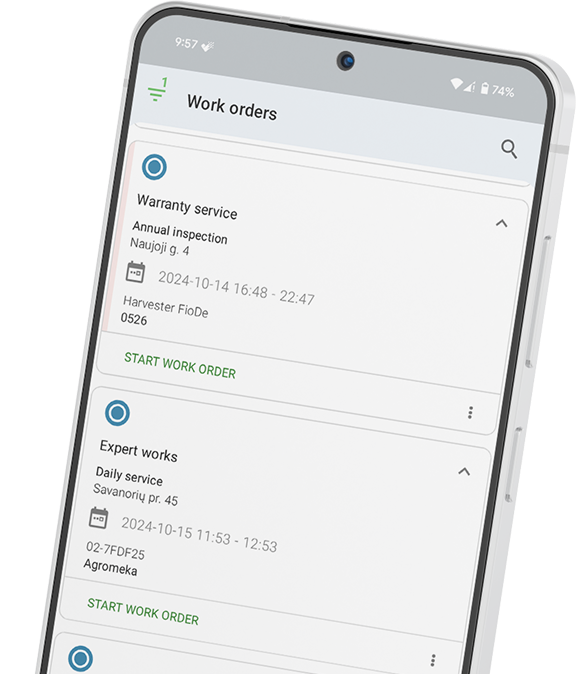
Frontu addresses this by enabling real-time data capture directly from the field. Operators can log machine hours and status updates through mobile devices, removing reliance on paper forms or delayed data entry.
This immediacy changes how decisions are made. Instead of reviewing utilisation weeks later, managers can identify underperforming assets or sites as issues emerge. Patterns such as repeated idle time or inconsistent usage become visible across the entire fleet.
The analytics layer transforms raw data into actionable insights. It becomes possible to compare utilisation between regions, evaluate operator performance and detect inefficiencies before they impact financial results.
For companies operating across multiple EU countries, this centralised visibility is particularly valuable. It creates a consistent operational standard regardless of local practices or reporting habits.
Machine utilisation is the clearest indicator of how effectively capital investments are being used. It reflects not only operational discipline but also the quality of decision-making across the business.
Relying on intuition is no longer sufficient in competitive European markets. Data-driven insights allow companies to optimise existing assets, delay unnecessary purchases and improve overall profitability.
The objective is not simply to keep machines running. It is to ensure that every hour of operation contributes to measurable business outcomes. Adopting structured tracking and modern field service tools makes this transition achievable.




Our list of integrations is updated frequently. Explore each integration in its own separate page for more information.
Link copied!
Join 10,000+ FSM leaders. Subscribe to our monthly expert-led newsletter. We find and report on case studies, success stories and playbooks that are working out there right now.