Zapeli na papiru: zašto se dijelovi Europe još uvijek bore s digitalizacijom
Author: Vytautas Majauskas | 4 veljače, 2026
Europa je na putu digitalizacije, ali to čini vrlo neravnomjerno. Neke zemlje žure usvojiti sve vrste digitalnih alata, dok druge zaostaju, držeći se papira, ručnih rutina i sustava koji se jedva mijenjaju desetljećima. Te razlike utječu na način na koji tvrtke rade, donose odluke i prelaze na novi softver koji zamjenjuje dugogodišnje navike.
Prema podacima EU-a, digitalne vještine još uvijek su na nejednakim razinama na kontinentu. Te nejednakosti oblikuju način na koji zaposlenici obavljaju svoje svakodnevne zadatke, koliko lako organizacije usvajaju nova rješenja i koliko brzo novi proizvodi mogu ući na različita tržišta. Prije nego što pogledamo brojke, vrijedi zapamtiti jednu stvar: digitalizacija nije samo tehnologija, ona ovisi o ljudima, vještinama i svakodnevnom ponašanju.
Gledajući DESI indikator, podjela je jasna kada je riječ o osnovnim digitalnim vještinama u pet područja kompetencija: korištenje informacija, komunikacija, stvaranje sadržaja, sigurnost i rješavanje problema. To nisu napredne sposobnosti, već osnovne vještine koje pokazuju koliko su pojedinci spremni koristiti digitalne alate na poslu i kod kuće.
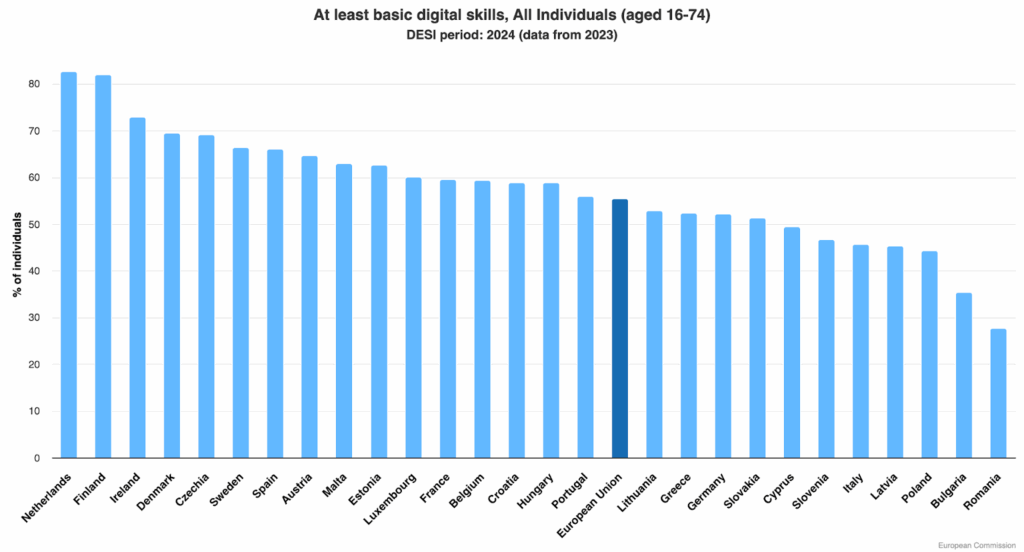
Razina digitalnih vještina pojedinaca (od 2021. nadalje), Eurostat, DESI indikatori
Poredak dijeli zemlje u dvije široke skupine. Nizozemska, Finska i Irska su među najjačim izvođačima, s velikim udjelom stanovništva koje je u stanju obaviti bitne digitalne zadatke. Na takvim tržištima digitalni alati na radnom mjestu su uobičajeni i očekivani. Rumunjska i Bugarska su na drugom kraju, gdje mnogim ljudima nedostaje čak i osnovna razina znanja. Nekoliko zemalja srednje i istočne Europe nalazi se bliže ovom nižem rangu, što znači da bi se veliki dijelovi njihove radne snage mogli boriti sa svakodnevnim digitalnim zadacima. Taj je jaz više od same statistike. On diktira koliko brzo se tvrtke moderniziraju i koliko se ugodno radnici osjećaju kada se uvedu novi alati.
Razlog zašto je digitalizacija niska u nekim regijama nije nedostupnost tehnologije. Velik dio toga dolazi iz radne kulture i ustaljenih rutina. Na određenim tržištima, niža razina znanja engleskog jezika otežava navigaciju mnogim softverskim alatima, usporavajući uvođenje i zahtijevajući više obuke. Mnoge tvrtke još uvijek koriste naslijeđeni softver koji je teško integrirati ili ažurirati, što prisiljava timove da zadrže stare tijekove rada čak i kada znaju da su neučinkoviti.
Istraživanje tržišta srednje i istočne Europe pokazuje da su izazovi digitalizacije snažno povezani s organizacijskom zrelošću. Neke tvrtke rade u fragmentiranim procesima, gdje različiti odjeli koriste različite alate i ne postoji dosljedan pristup. Drugi se oslanjaju na dugogodišnje navike kao što su ispisani radni listovi ili usmene upute. To ponašanje često nije potaknuto otporom prema promjenama, već nesigurnošću. Papirnate rutine su ugodne i predvidljive. Ne zahtijevaju nove vještine i nose mali percipirani rizik. Rezultat je da usvajanje postaje sporo i neravnomjerno, čak i dok su poduzeća pod pritiskom da se moderniziraju.
Ekonomske razlike također igraju ulogu. Zrelija gospodarstva obično ranije ulažu u obuku, infrastrukturu i softver. Tržištima s nižom digitalnom pismenošću treba više vremena za prijelaz jer i tvrtkama i zaposlenicima treba više vremena za izgradnju novih navika. Zajedno, ti čimbenici objašnjavaju zašto se Europa i dalje kreće različitim brzinama.
Digitalne vještine oblikuju način na koji tvrtke ulaze i šire se na različitim tržištima. Strategija koja dobro funkcionira u jednom dijelu Europe možda neće biti učinkovita u drugom, jednostavno zato što korisnici različito koriste digitalne alate.
Te razlike utječu na cijeli proces izlaska na tržište. Dizajn prodajnog lijevka, prodajni proces, očekivanja cijena i modeli podrške se mijenjaju ovisno o digitalnoj zrelosti. Jedinstveni paneuropski pristup obično loše funkcionira. Umjesto toga, tvrtke se moraju prilagoditi specifičnoj stvarnosti svakog tržišta, umjesto da pretpostavljaju da se korisnici ponašaju na isti način svugdje. U praksi to često znači prelazak s pristupa vođenog proizvodom na pristup vođen odnosima na tržištima gdje su digitalne navike slabije.

Intervjui sa stručnjacima koji rade u regiji ukazuju na konkretne prepreke koje koče digitalno usvajanje. Kao što je prikazano u istraživanju koje je proveo Magoom, jedna od vodećih litavskih agencija za marketing i SEO, izazovi digitalizacije na tržištima srednje i istočne Europe ne proizlaze iz same tehnologije, već iz vještina, navika i organizacijske zrelosti.
Niža razina znanja engleskog jezika stvara praktičan problem jer su mnogi alati, vodiči i sučelja izgrađeni za korisnike koji tečno govore engleski jezik. To dodaje trenje tijekom uvođenja i svakodnevne upotrebe. Snažna preferencija za lokalne dobavljače još je jedan čimbenik, osobito na tržištima gdje su dugoročni poslovni odnosi u središtu donošenja odluka. Povjerenje se razvija kroz poznavanje i osobni kontakt, a sama udaljena komunikacija rijetko je dovoljna.
Naslijeđeni sustavi ostaju jedna od najvećih prepreka. Mnoge organizacije još uvijek koriste starije ERP-ove ili softver izrađen po narudžbi koji se ne može lako integrirati s modernim alatima. Nadogradnja je složena i skupa, pa tvrtke odgađaju promjene ili provode samo djelomična poboljšanja. Fragmentacija tržišta dodaje još jedan sloj. Norme, očekivanja i načini rada mogu se razlikovati čak i između susjednih zemalja, što znači da ono što funkcionira na jednom tržištu možda neće izravno prenijeti na sljedeće. U nekim vertikalama terenski radnici imaju malo povjerenja u digitalne alate i preferiraju telefonske pozive, rukom pisane bilješke ili aplikacije za razmjenu poruka. Što su slabije digitalne navike, to je postupniji i resursno intenzivniji prijelaz na strukturirane digitalne tijekove rada.
Ta je podjela najizraženija u operacijama terenske službe, gdje timovi rade izvan ureda i oslanjaju se na pravovremenu komunikaciju. Terenski radnici na digitalno zrelijim tržištima obično koriste mobilne aplikacije, automatizirano zakazivanje i digitalne radne naloge za koordinaciju zadataka i suradnju s drugima.
Terenski timovi na tržištima visoke zrelosti vjerojatnije će koristiti digitalne radne naloge i mobilne aplikacije s automatiziranim planiranjem. Mnogi timovi na tržištima niže zrelosti još uvijek ovise o papirnatim listovima i rukom pisanim bilješkama, tablicama, aplikacijama za razmjenu poruka ili telefonskim pozivima.
Te se razlike izravno očituju u svakodnevnim operacijama. Ručni procesi stvaraju kašnjenja, informacijske praznine i nedosljedno praćenje zadataka. Ažuriranja kasne u ured, podatke je teže konsolidirati, a menadžeri imaju ograničen uvid u tekući rad. Izravan utjecaj pada na kvalitetu usluge, vrijeme odziva i operativne troškove. Sve dok digitalne vještine ostaju neravnomjerne, operacije terenske službe nastavit će pokazivati najočitiji kontrast između europskih naprednijih i manje zrelih tržišta.
Europski jaz u digitalizaciji oblikuje način na koji radnici koriste alate, kako tvrtke usvajaju softver i koliko dugo ručne rutine ostaju dio svakodnevnih operacija. EU ima za cilj značajno podići osnovne digitalne vještine u nadolazećim godinama, ali dok se napredak ne osjeti u svim regijama, organizacije koje se šire unutar kontinenta morat će prilagoditi svoje planove specifičnostima svakog tržišta i osloniti se na ono što se događa na terenu, a ne na pretpostavke preuzete s naprednijih tržišta.



Marketing Strategist
Founder at Magoom, where he has been pivoting custom marketing strategies since 2016. Vytautas currently focuses on SEO, PPC and demand generation for clients across the USA and EU. His career includes leadership roles as Chief Marketing Officer at Frontu and Spotos, and Head of Marketing at Oxylabs.
Link copied!

 Table of Contents