End-to-end digital workflow
Connect every step from work order creation to job completion, reporting, and invoicing. Service data stays digital, structured, and visible throughout the workflow.


Sync enterprise planning, service execution, and field data in one streamlined workflow. Give technicians a faster way to complete jobs while AX stays in control of operations, inventory, and reporting.
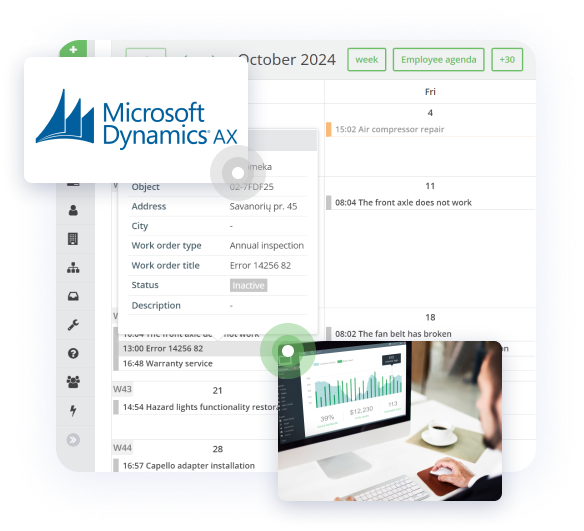
Business Central triggers data updates, follow-up, and invoicing.









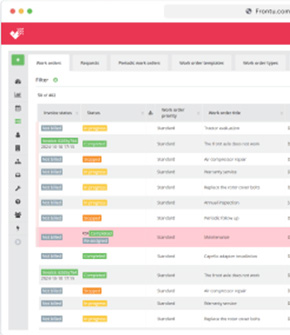
Connect every step from work order creation to job completion, reporting, and invoicing. Service data stays digital, structured, and visible throughout the workflow.
Customers, assets, work orders, parts used, and job outcomes stay synced across systems, reducing duplicate entry, conflicting records, and manual work between teams.
Frontu gives field teams a mobile-first workspace built for real service work, helping technicians complete jobs faster and with fewer interruptions, handoffs, and missing details.
Job completion data moves back into Microsoft AX faster, helping teams speed up invoicing, stock updates, and internal reporting.
Microsoft AX handles complex enterprise operations across finance, inventory, and resource planning. Frontu adds the field execution layer that keeps technicians productive and returns real job data back into AX faster.

AX gives you centralized control over operations, resources, and financial data. Frontu turns that structure into mobile service execution with tasks, checklists, forms, photos, signatures, and offline work for technicians in the field.
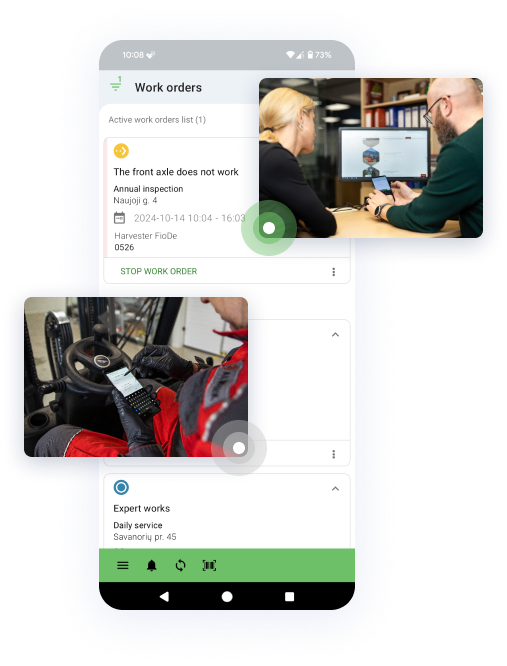
Frontu gives dispatchers and managers a live view of job progress, technician activity, and work completion instead of relying on delayed updates from calls, paper, or end-of-day admin handoff.
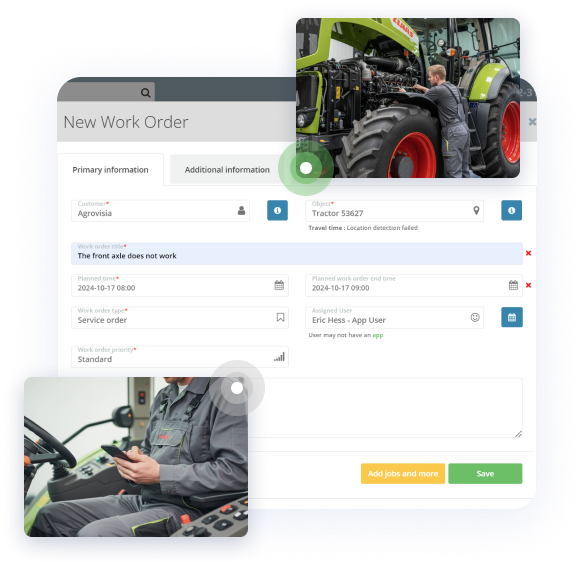
Hours worked, parts used, and job outcomes are captured at the point of work and returned in structured form. That helps AX reflect what actually happened in the field, improving cost visibility, reporting quality, and operational control.
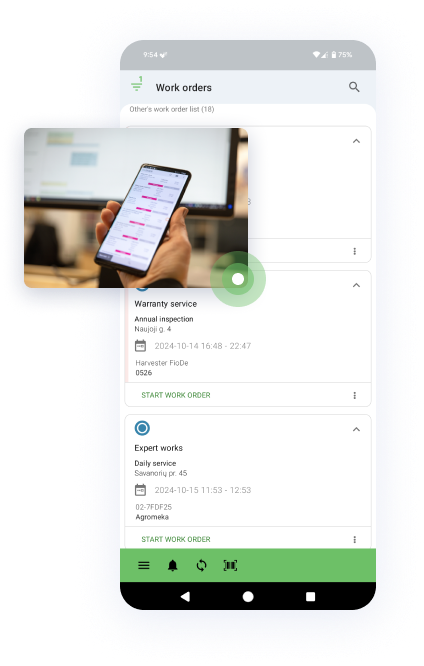
Once work is completed in Frontu, the data is ready to move back into AX for invoicing, stock updates, and downstream business processes. This reduces manual coordination across teams and helps larger service operations move faster.


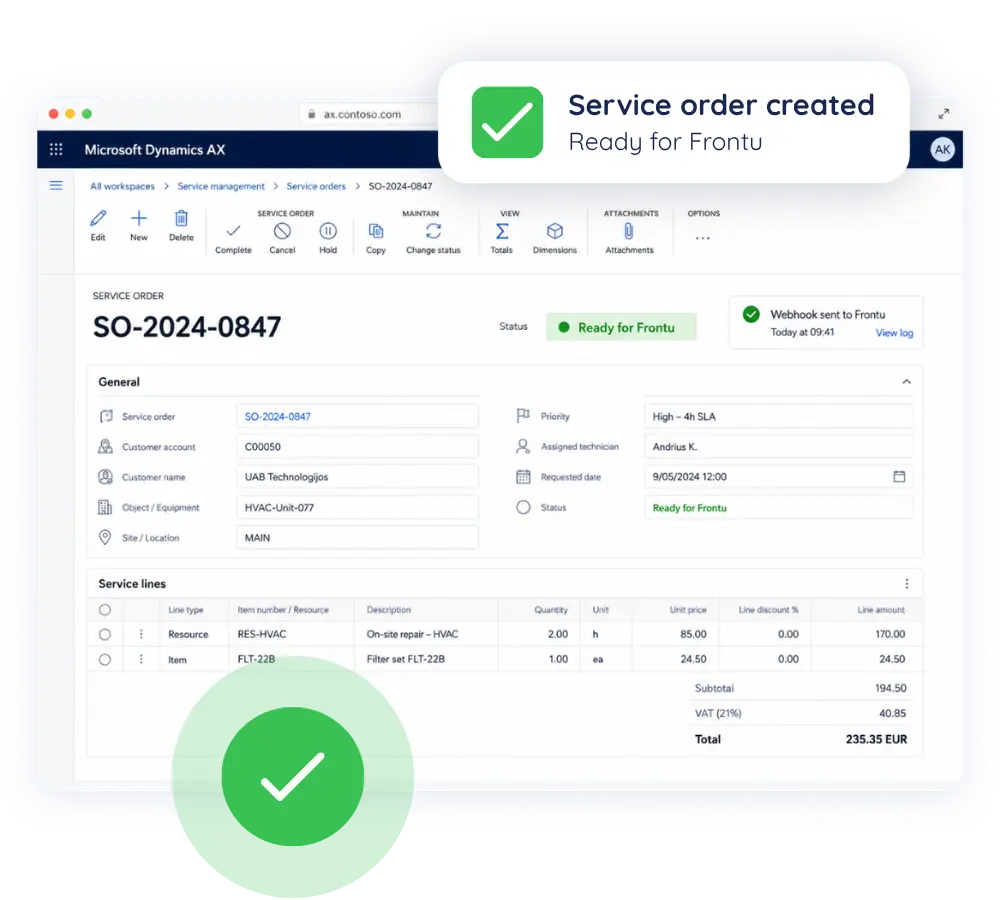
Service coordinators fill in the service order in Microsoft AX, allocate spare parts if needed, and set the status to plan the work. The service order is then synced to Frontu.
Technician allocation can also be done using the Frontu planner.
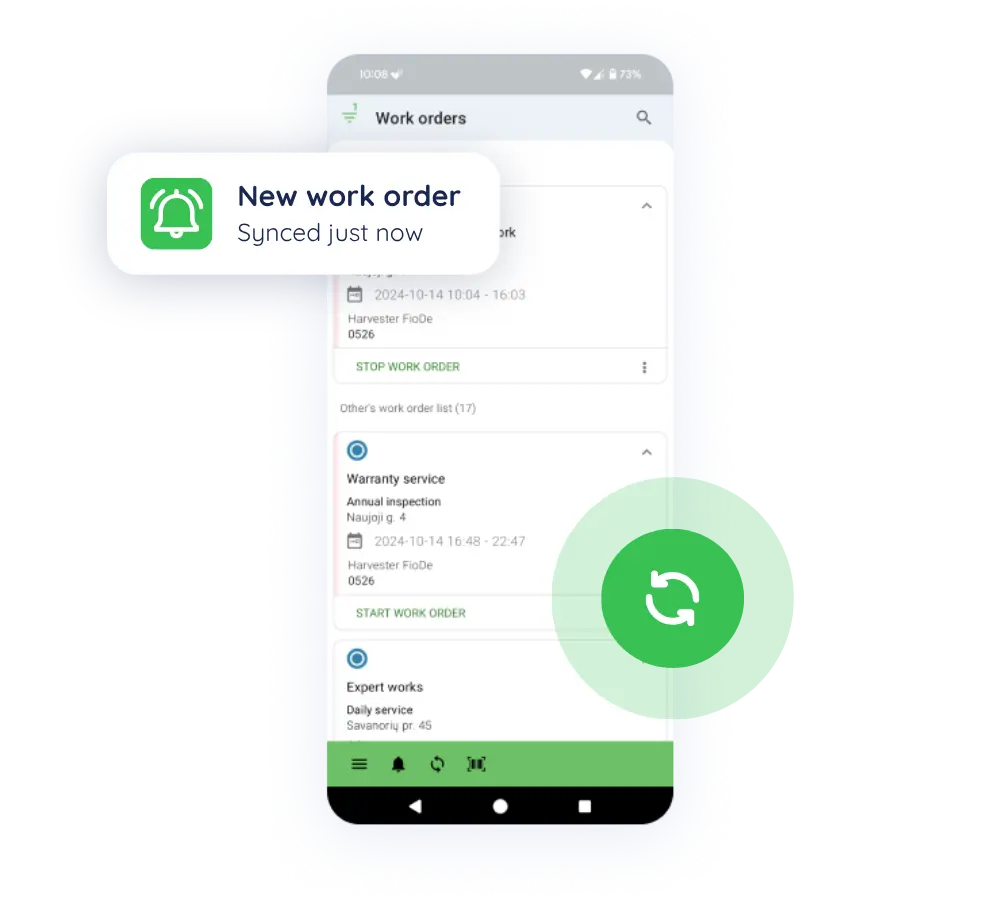
Once the foreman assigns the right technician to the work, the work order appears in the technician’s Frontu app with all details synced and ready to start – no manual entry needed.
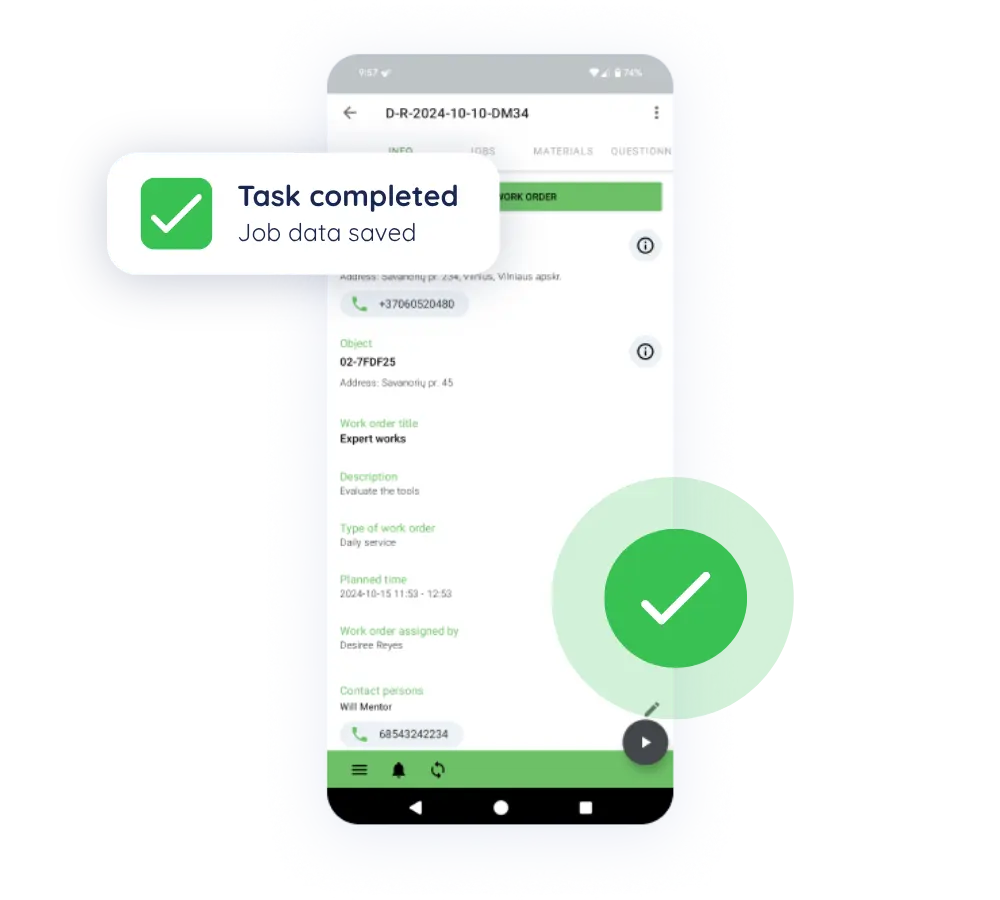
The technician logs all work directly in Frontu on-site, even when offline: required repair fields, time used, fitted spare parts, photos, and the client’s digital signature. The data is then synced back to the back office for foreman approval.
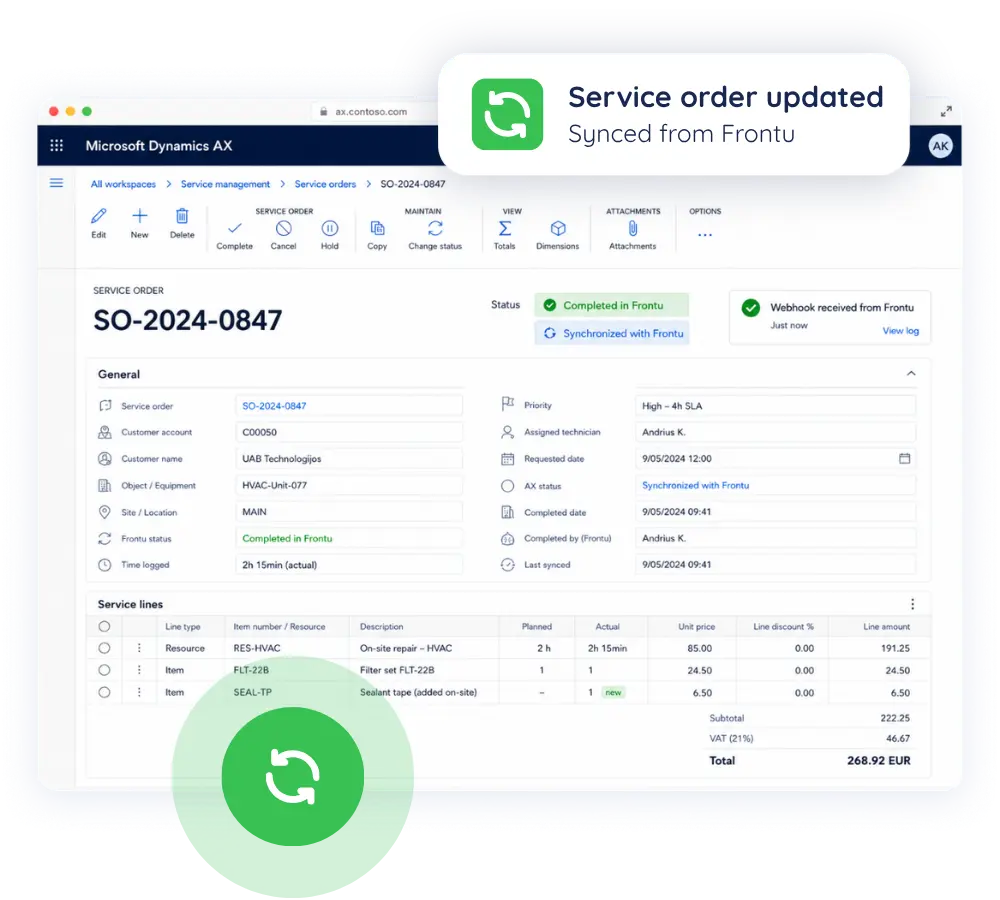
When the foreman approves the service order in Frontu, all spare parts, labour, and travel information sync back to the original Microsoft AX service order automatically.
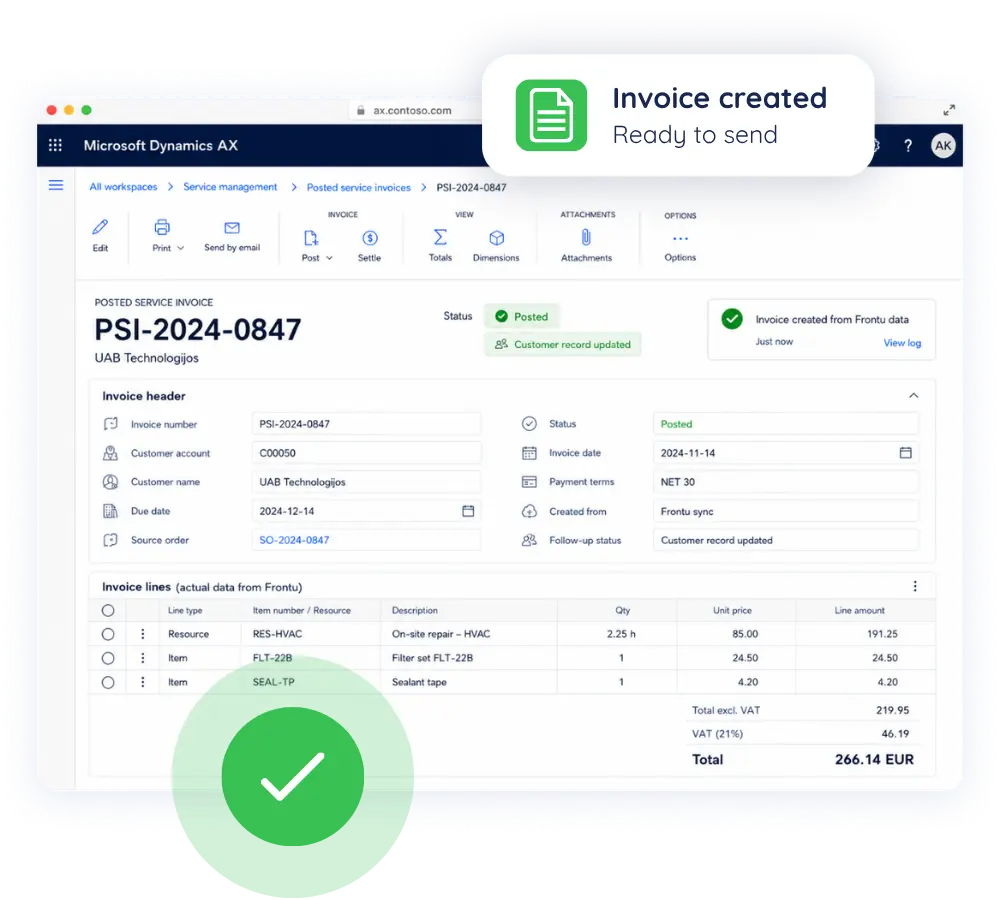
No manual reconciliation is left. No cash flow problems or forgotten invoices. Service order lines are updated instantly and ready for invoicing on the same day the work is approved.
Do I need to replace Microsoft AX to use Frontu?
No. Frontu works alongside Microsoft AX. AX remains your enterprise system for finance, inventory, and operational control, while Frontu adds the field execution layer for technicians and service teams.
Why add Frontu if we already use AX?
AX is strong at enterprise planning and control, but field teams still need a mobile environment built for execution. Frontu gives technicians a faster way to receive jobs, log work, capture proof of work, and return clean data back into AX.
What kind of data can sync back to AX?
Frontu can return structured service data such as job outcomes, labor time, parts used, status changes, and completion details, helping AX reflect what actually happened in the field.
How does this integration help larger service operations?
Frontu reduces the lag between work completion and administrative action. That helps enterprise teams improve visibility, reduce manual coordination, and move faster on invoicing, stock updates, and downstream processes.
What if our AX environment is older or more complex?
Complex or legacy environments may require more technical evaluation, but Frontu already has a practical approach for working with older systems and defining secure, workable integration flows.
Will our teams need to work in both systems?
No. Technicians use Frontu for field work, while finance, operations, and back-office teams stay in AX. The integration keeps the data moving between systems so each team can stay in the tool built for its role.
Join 10,000+ FSM leaders. Subscribe to our monthly expert-led newsletter. We find and report on case studies, success stories and playbooks that are working out there right now.